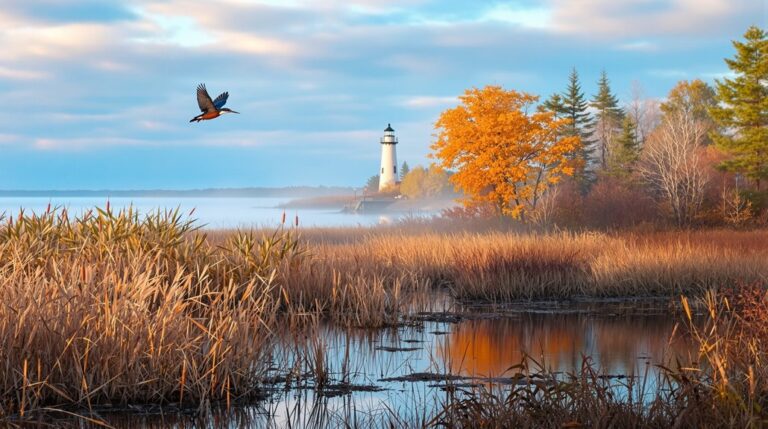
Arizona Birding is a great hobby for beginners and veterans alike, you’ll love the mix of deserts, canyons, and forests.
Start at Sonoita and Madera Canyon for soaring hawks and hummingbirds, bring BAK4 binoculars and a field guide.
Stay quiet to spot chickadees in oak woodlands, and join a guided walk at a state park to see woodpeckers up close.
There’s more to uncover as you explore the trails ahead.
Top Arizona Birding Hotspots by Region
Arizona’s top birding hotspots span from the mountains to the deserts. When planning a trip, you get a regional focus on where different birds live, and you can choose routes that fit your schedule. Habitats vary, from oak woodlands to riparian edges, and each place offers a new chorus of colors.

Start in high-country towns for cool air, then head to desert parks for sun and sunlit songs. Bring water, binoculars, and patience, because steady steps reveal rewarding sightings, friendly locals, and easy beginner wins. You’ll smile at each small moment. For clearer views in varying light, choose binoculars with BAK4 prisms for sharper, higher-contrast images. To capture detailed images of fast-moving species, consider using a camera with fast continuous shooting for sharp wildlife shots.
Southeast Arizona: Special Species Spots to Know
If you’re chasing Southeast Arizona’s special species, you’ve got prime spots that deliver reliably. Expect habitats from oak woodlands to riparian streams, a true portrait of habitat diversity. The Sonoita and Huachuca areas shine during seasonal migration, with neat surprises along the trails. In puzzles like Madera Canyon, you’ll see hummingbirds zooming near flowers and shade. Bring light layers, water, and a guide map to spot rarities safely.
These spots work year-round, but peak activity usually happens during spring and fall migration. If you explore Ramsey Canyon or Cave Creek Canyon, you’ll meet patient birds and friendly people. For sharper action shots in these dynamic environments, use a fast shutter speed to freeze motion and capture clear detail. A weather-resistant lens ensures reliable performance when shooting in changing mountain conditions.
Hummingbirds and Flycatchers in Arizona’s Canyons
When you wander into Arizona’s canyons, hummingbirds and flycatchers put on a dazzling show. These tiny performers zoom between nectar feeders and wildflowers, flashing colors against red rocks. You’ll notice canyon timing matters, as birds surge in spring and again in late summer, when insects and blooms peak. Bring a small camera or notebook and stay quiet, so you don’t scare them away. Hummingbirds chase rivals in shimmering spirals, while flycatchers perch and pop out to snag insects. Plan short walks, check water sources, and listen for tiny wings beating near shaded ravines. With patience, you’ll catch delightful moments and feel confident exploring Arizona’s canyon watch list. You’ll want to go again.
High-Elevation Forests and Oak Woodlands to Explore
Venturing into high-elevation forests and oak woodlands brings a cooler, shaded contrast to canyon strolls. You will notice quieter trails and cooler air as you hike above the desert heat. Forest access here often means well-marked paths and sturdy trails that welcome beginners. Keep an eye out for woodland birds fluttering through oaks and pines, especially in the early morning. Bring water, light layers, and a notebook to jot sightings for later. This habitat hosts chickadees, warblers, and raptors, and you can learn song clues from friendly locals. Practice slow scans and quiet pauses, and you will see details others miss.
State Parks for Guided Bird Walks and Trails
State parks offer guided bird walks, a friendly way to learn as you hike. You’ll step onto dusty trails with expert guides who know where to look for sparrows, warblers, and dramatic raptor sightings. Park events appear on weekends, and you can join casual strolls or longer hikes to fit your schedule. The guides share simple tips, like how to spot tracks, identify calls, and stay quiet enough for hidden birds. Bring water, sunscreen, and curiosity, and enjoy a safe, social way to explore Arizona’s amazing birds. You’ll leave inspired and enthusiastic for more.
Species to Watch on the Arizona Birding Trail
On the Arizona Birding Trail, you’ll spot bright hummingbirds and bold woodpeckers up close. You’ll notice migration patterns shift with winds, rain, and warm fronts, so new colors flash along every trail. As you explore, keep notes on seasonal changes, because birds rearrange in the spring crowds and fall roosts. Look for Violet-crowned or Magnificent hummingbirds at hot spots like Ramsey Canyon, and watch for Gray Hawks circling over riparian groves. Bring binoculars, a snack, and patience, since the best sightings come with quiet pacing and friendly chat with fellow birders. You can learn quickly, laugh often, and stay curious.
Frequently Asked Questions
Which Under-The-Radar Sites Consistently Host Desert Specialties?
These under-the-radar spots consistently host desert specialties: Patagonia, Sonoita, and Madera Canyon. You’ll glimpse raptors, hummingbirds, and sparrows, especially from late winter to early spring, when migratory and resident desert birds concentrate along riparian edges.
What’s the Best Field Guide for Arizona Birds?
From a thorough field-guide comparison, select a guide that concentrates on Arizona species, ideally one that covers regional endemics and raptors. Make your choice based on current range maps, abundant photos, and clear plates.
How to Photograph Elusive Raptors Without Disturbing?
Use long lenses, stay hidden, and move slowly. Practice blind techniques to capture action without alerting birds, and respect ethical distances to prevent disturbance. Wait for natural poses, use blinds, and never approach nests or perches.
Are There Night-Birding Opportunities in Canyons?
Yes, canyons offer night-birding opportunities: you’ll listen for owls and nightjars, scan cliff faces for silhouettes, and look for bats. Bring a headlamp, stay quiet, and respect habitats to maximize encounters without disturbing them tonight.
Which Weather Patterns Most Affect Daily Bird Activity?
Weather patterns and temperature changes, not just monsoon season, most influence daily bird activity. Heavy rain, high humidity, and wind can reduce foraging and singing, while cool mornings and warm afternoons shift where and when you feed, roost, and migrate nearby.
Conclusion
Birding Arizona is easy to start and incredibly rewarding when you take your time. Bring comfy shoes, a lightweight chair, and BAK4 binos to spot tiny songsters clearly. Start in a state park and join guided walks for great tips on seasons and trails. Keep quiet, scan slowly, and look up for hawks and hummingbirds looping overhead. Remember to snap quick photos, note locations, and share sightings with friends to keep the fun growing daily.