If you’re serious about bird photography, choosing the best lens for bird photography is one of the most important decisions you will make. A long telephoto zoom is absolutely essential, allowing you to capture distant subjects without disturbing them in their natural habitat.
Brands like Fujifilm and Sigma offer excellent options, but factors such as aperture, image stabilization, and autofocus speed can dramatically affect your results. In this guide, I will break down the top contenders and explain which features you should never compromise on, because the details really do matter.
| Fujifilm Fujinon XF150-600mmF5.6-8 R LM OIS WR Lens |  | Ultimate Reach | Focal Length: 150-600mm | Maximum Aperture: F5.6-8 | Image Stabilization: OIS | VIEW LATEST PRICE | Read Our Analysis |
| Fujinon XF100-400mmF4.5-5.6 R LM OIS WR |  | Versatile Telephoto | Focal Length: 100-400mm | Maximum Aperture: F4.5-5.6 | Image Stabilization: 5-stop OIS | VIEW LATEST PRICE | Read Our Analysis |
| Sigma 100-400mm Telephoto Zoom Lens for Fujifilm + Bundle |  | Feature-Rich Package | Focal Length: 100-400mm | Maximum Aperture: F5-6.3 | Image Stabilization: OS | VIEW LATEST PRICE | Read Our Analysis |
| Fujinon XF55-200mmF3.5-4.8 R LM OIS |  | Compact Starter | Focal Length: 55-200mm | Maximum Aperture: F3.5-4.8 | Image Stabilization: 4.5-stop OIS | VIEW LATEST PRICE | Read Our Analysis |
More Details on Our Top Picks
Fujifilm Fujinon XF150-600mmF5.6-8 R LM OIS WR Lens
If you’re looking for a fantastic all-around option that won’t break the bank, the Fujifilm Fujinon XF150-600mm is definitely worth a look, especially considering its impressive reach when paired with teleconverters. I can tell you it delivers a 35mm equivalent focal length of 229-914mm, extending to 1824mm with the 2x teleconverter, which is incredible for distant birds. It’s built with 24 elements in 17 groups, including Super ED and ED elements, minimizing chromatic aberration. Don’t worry about shaky hands; this lens provides OIS, and it’s weather-resistant too! At 3.53lbs, I find it manageable, and it takes 82mm filters easily.
- Focal Length:150-600mm
- Maximum Aperture:F5.6-8
- Image Stabilization:OIS
- Mount Type:XF
- Weather Resistance:WR
- Filter Size:82mm
- Additional Feature:Four Super ED elements
- Additional Feature:1.4x/2x teleconverters
- Additional Feature:Lightweight: 3.53lb
Fujinon XF100-400mmF4.5-5.6 R LM OIS WR
Though it’s a bit of an investment, the Fujinon XF100-400mm is an excellent choice for bird photographers wanting a versatile and relatively lightweight telephoto option. I find its 100-400mm range (equivalent to 152-609mm) really helpful for various birding scenarios, and it weighs under 4.2 pounds, making handheld shooting comfortable. Fujifilm incorporated 21 elements into 14 groups, including five ED and one Super ED element, which greatly reduces chromatic aberration. Plus, a fluorine coating repels water and dirt, keeping your images clean, and its 5-stop image stabilization system helps capture sharp shots. Don’t worry about the weather; it’s water and dust resistant, and operates down to 14°F!
- Focal Length:100-400mm
- Maximum Aperture:F4.5-5.6
- Image Stabilization:5-stop OIS
- Mount Type:XF
- Weather Resistance:WR
- Filter Size:77mm
- Additional Feature:5-stop stabilization
- Additional Feature:Fluorine coated front
- Additional Feature:4.2 pounds weight
Sigma 100-400mm Telephoto Zoom Lens for Fujifilm + Bundle
For Fujifilm shooters wanting to seriously upgrade their bird photography, the Sigma 100-400mm F5-6.3 DG DN OS Contemporary lens,especially within this thoughtfully curated bundle,is an excellent choice. Released initially in 2020, this lens now boasts a dedicated Fujifilm X mount, and the bundle includes a handy accessory and cleaning kit, all nestled within a practical gadget bag. I find its 100-400mm focal length, equivalent to 150-600mm, reaches distant subjects beautifully, aided by its 22 elements, including FLD and SLD glass, correcting aberrations. Weighing 1135g and crafted with magnesium alloy, it’s durable yet portable, featuring optical stabilization for smoother shots,so you won’t need a tripod all the time! It delivers high-resolution performance, perfect for capturing incredible detail.
- Focal Length:100-400mm
- Maximum Aperture:F5-6.3
- Image Stabilization:OS
- Mount Type:Fujifilm X
- Weather Resistance:Not explicitly stated
- Filter Size:Not specified
- Additional Feature:Includes accessory kit
- Additional Feature:Magnesium alloy build
- Additional Feature:Optical Stabilization (OS)
Fujinon XF55-200mmF3.5-4.8 R LM OIS
The Fujinon XF55-200mm is a fantastic option for bird photographers who want to expand their reach without a huge investment, offering a solid 300mm equivalent focal length on APS-C Fujifilm cameras. I find its f/3.5-4.8 aperture perfectly usable, especially with good light, and you can stop it down to f/22 when needed. It’s lightweight and boasts a fast Stepper AF motor, meaning I can quickly lock focus on moving birds. Plus, the built-in optical image stabilization, claiming 4.5 stops, really helps keep shots sharp. Don’t forget this lens accepts 62mm filters, and it doesn’t require batteries – simple and effective!
- Focal Length:55-200mm
- Maximum Aperture:F3.5-4.8
- Image Stabilization:4.5-stop OIS
- Mount Type:Fujifilm X
- Weather Resistance:Not explicitly stated
- Filter Size:62mm
- Additional Feature:Stepper AF motor
- Additional Feature:4.5 stops stabilization
- Additional Feature:62mm filter size
Factors to Consider When Choosing a Lens for Bird Photography
You won’t get great bird photos with just any lens, so let’s look at what really matters when making your choice. We’ll consider focal length range, how aperture and light affect images, and whether you need image stabilization, plus autofocus performance and lens weight. Understanding these factors, and how they work together, will help you find a lens that fits your needs and budget, letting you capture stunning shots.
Focal Length Range
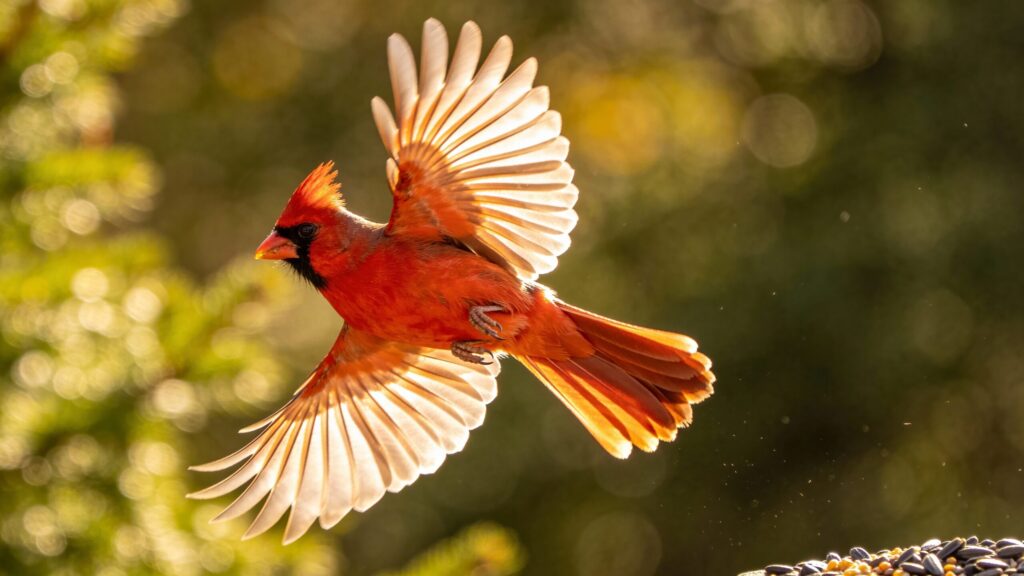
Choosing the right focal length is without question the most important factor when getting into bird photography, and it’s something I’ve spent a lot of time considering. I generally recommend starting with something in the 150-300mm range – it’s versatile for larger birds or those you can approach closely. However, if you want to photograph smaller, distant birds without disturbing them, you’ll likely need 600mm or more. Remember, if you’re using an APS-C sensor camera, multiply the lens’s focal length by 1.5x to get the 35mm equivalent.
Luckily, many zoom lenses, like 150-600mm options, give you that flexibility. Don’t forget extenders, either; a 1.4x teleconverter can boost a 300mm lens to 420mm, helping you reach further!
Aperture And Light
Understanding aperture and how it affects light is key to getting sharp, well-exposed bird photos, and it’s something that really unlocks your potential. I always prioritize a wide maximum aperture, like f/5.6, because it lets me use faster shutter speeds to freeze those quick bird movements, reducing blur. Larger apertures also transmit more light, which is vital for autofocus and visibility during the low-light hours when birds are most active, like dawn or dusk.
Keep in mind that zooms for APS-C cameras often have variable apertures, narrowing as you zoom in, so I watch that closely. Adding teleconverters boosts magnification, but it also increases your f-number, diminishing light, something to keep in mind for your camera’s autofocus capabilities. While stopping down to f/16 or f/22 maximizes depth of field, you risk diffraction, which softens feather details.
Image Stabilization Needs
While it’s amazing what modern cameras can do, image stabilization is a feature that really shouldn’t be overlooked when you’re picking out a lens for bird photography. At lengths up to 600mm, stabilization actively fights handshake, letting me get sharp shots without forcing incredibly fast shutter speeds like 1/1000s. I find that combining in-body stabilization with a lens’s optical image stabilization (OIS) gives me even more compensation, often around 5-6 stops total.
Generally, the rule is to shoot around 1/focal length, but stabilization lets me drop that, think 1/125s instead of 1/1000s at 600mm. When birds are perched, or moving slowly, it cuts down on blur, though I still need fast autofocus and speeds for flight. Panning modes help, too, keeping the bird sharp while blurring the background at speeds like 1/250s to 1/500s.
Autofocus Performance
Because birds rarely hold still, fast and accurate autofocus is absolutely essential for capturing sharp images, and you’ll really want a lens that can keep up with their movements. I find lenses with linear motors (LM) outperform those with stepping motors, delivering quicker focus and smoother tracking, critical when a bird suddenly changes direction. Don’t underestimate optical stabilization, either; a 4.5 or 5-stop rating lets me handhold longer focal lengths with confidence, reducing blur. Consider minimum focus distance, too, as a shorter distance, like 1.75m, and decent magnification (0.19x) help with closer encounters.
I also check teleconverter compatibility, knowing it extends reach, but it often narrows your aperture to f/8 or f/16, potentially slowing autofocus on some camera bodies. Ultimately, prioritizing speed and accuracy in autofocus will drastically improve your results.
Lens Weight Matters
Lens weight is a surprisingly big deal, it’s something you’ll definitely feel during those long photography sessions, and it shouldn’t be overlooked when you’re picking out your gear. I’ve learned that because birding often means hiking and waiting, a lighter load keeps me shooting longer, and helps avoid fatigue. Consider the Fujifilm 150-600mm at 1605g, versus the lighter Sigma 100-400mm at 1135g, or even the Fujifilm 100-400mm under 1400g; the difference is considerable.
Heavier lenses usually demand a tripod or monopod, restricting movement, whereas lighter options let me handhold more easily. Remember, every gram counts when you’re traveling, and arm and back strain can quickly cut a shoot short. Think about your physical limitations and shooting style when evaluating that extra weight, it’s a pivotal decision!
Weather Sealing Benefits
Protecting your investment and ensuring consistent performance is essential, and that’s where weather sealing comes in. I can’t stress enough how important it is, especially when I’m out in the field chasing that perfect shot, dust and moisture can really ruin your day. Sealed lenses use rubber gaskets around the mount, focus ring, and switches, creating barriers against rain and fine particles that cause issues. They’ll even keep functioning in temperatures down to 14°F, maintaining internal precision, which is fantastic!
Many also feature fluorine coatings, repelling water and dirt for easier cleaning. Don’t underestimate this; I’ve seen moisture damage aperture blades and stabilization systems. Weather sealing extends a lens’s life, preserving optical alignment, and that allows me to keep creating stunning bird photos, year after year.
Filter Thread Size
An essential aspect often overlooked when selecting a telephoto is its filter thread size, and it’s something you’ll definitely want to think about. This measurement dictates the diameter of screw-on filters, like UV or polarizing filters, you can use, and common sizes for birding lenses are 62mm, 77mm, and 82mm. Generally, a larger thread size means a bigger front element, so the lens itself will likely be larger and heavier, which is something to consider during long shoots. I wouldn’t worry too much if your lens has a less common size, because adapter rings let you use smaller filters. Just be aware those rings *could* cause vignetting, especially on wider focal lengths, so test it out. You’ll find this size marked on the lens barrel with a Ø symbol followed by the millimeter measurement, look closely!
Optical Element Quality
Because bird photography often involves capturing distant subjects, the quality of the optical elements within your telephoto is incredibly important. You’ll notice high-end lenses boast numerous ED and Super ED elements, sometimes as many as four Super ED plus three ED, which really suppresses chromatic aberration, ensuring sharp images. I’ve found that combining flint and extra-low-dispersion glass, like one FLD and four SLD elements, helps correct color fringing across the zoom range. Lenses with more groups and elements, such as 17–14 groups with 21–24 elements, generally reduce aberrations and maintain contrast at long distances. Don’t forget coatings, though; fluorine coatings repel water and dirt, keeping your views clear, even in challenging conditions. If you’re thinking of teleconverters, matched ones minimize resolution loss, maintaining a high element count.
Frequently Asked Questions
Is Full-Frame Necessary for Bird Photography?
I don’t believe it’s essential, though it helps with high ISO performance. I often get fantastic shots with my crop-sensor camera, it extends my reach. You can definitely succeed without full-frame, especially if you’re budget-conscious.
Can I Use a Teleconverter With These Lenses?
Yes, I absolutely can use teleconverters with these lenses, but understand you’ll lose some aperture. I’d suggest a high-quality 1.4x first; a 2x will degrade image quality quicker, though it’ll boost reach further.
What Tripod/Gimbal Best Supports Heavy Lenses?
I recommend a robust carbon fiber tripod with a smooth gimbal head. It’ll handle those hefty lenses’ weight, giving you stability and quick tracking. Look at brands like Really Right Stuff or Benro, they won’t let you down.
How Do I Track Birds in Flight Effectively?
I find anticipating a bird’s movement key; don’t just react, predict! I smoothly pan with its flight, keeping my focus point locked on its eye. Constant practice builds muscle memory, it’s essential, and I wouldn’t be without it.
What’s the Best Way to Clean Lens Elements?
I gently blow off loose dust with a blower, then use a microfiber cloth with lens cleaning solution. I apply a small amount to the cloth, not the lens, and wipe in a circular motion. Don’t press hard!