If you’re serious about birding, you’ll quickly realize the best binoculars for bird watching are not optional. They are the single most important tool for spotting detail, identifying species, and enjoying longer sessions without eye strain.
I’ve spent considerable time researching what truly elevates the experience, and it consistently comes down to a precise balance of magnification and objective lens size that suits real world birding conditions.
While compact models have their place, many dedicated birders find themselves reaching for something more capable. Let’s explore the features that consistently rise to the top and why they matter in the field.
| Occer Compact Binoculars for Adults & Kids – 12×25 |  | Pocket-Sized Powerhouse | Magnification: 12x | Objective Lens: 25mm | Prism Type: BAK4 | VIEW LATEST PRICE | Read Our Analysis |
| Hontry 10×25 Compact Binoculars for Bird Watching | 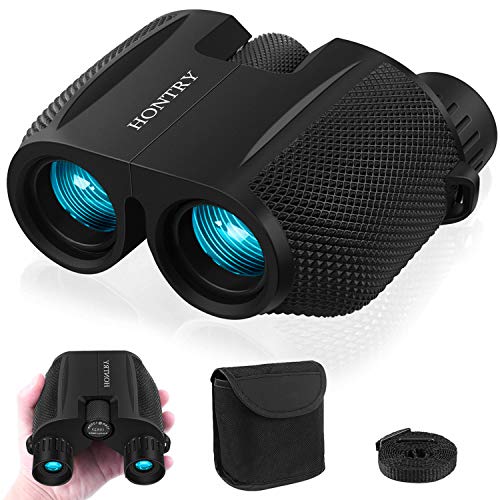 | Everyday Birding | Magnification: 10x | Objective Lens: 25mm | Prism Type: BAK4 | VIEW LATEST PRICE | Read Our Analysis |
| Adorrgon 12×42 HD Binoculars with Phone Adapter & Tripod | 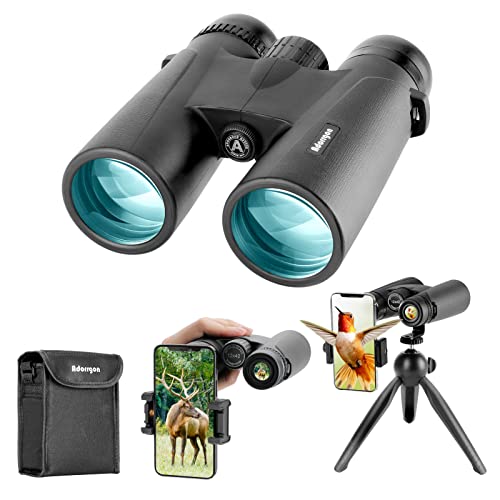 | Feature-Rich Package | Magnification: 12x | Objective Lens: 42mm | Prism Type: BAK4 | VIEW LATEST PRICE | Read Our Analysis |
| Nikon PROSTAFF P3 8×42 Binocular – Waterproof & Fogproof |  | Durable & Bright | Magnification: 8x | Objective Lens: 42mm | Prism Type: Not specified | VIEW LATEST PRICE | Read Our Analysis |
More Details on Our Top Picks
Occer Compact Binoculars for Adults & Kids – 12×25
If you’re looking for a highly portable and affordable option, the Occer 12×25 compact binoculars are worth considering. I found these easy to pack for any adventure, and they won’t weigh you down. They boast 12x magnification with a 25mm objective lens, giving me a 273ft field of view at 1000 yards.
The BAK4 prism and FMC coating deliver surprisingly clear images, even in low light. I appreciate the adjustable eye cups and 15mm eye relief, I can use them comfortably with glasses. The rubber grip guarantees I don’t drop them, and they’re waterproof.
- Magnification:12x
- Objective Lens:25mm
- Prism Type:BAK4
- Waterproofing:Yes
- Field of View:273ft/1000yds
- Weight:Not specified
- Additional Feature:FMC broadband coating
- Additional Feature:Large 15mm eyepiece
- Additional Feature:Cruise binocular strap
Hontry 10×25 Compact Binoculars for Bird Watching
Looking for binoculars that won’t weigh you down on your next adventure? I’ve found the Hontry 10x25s are a great option. They offer 10x magnification, balancing a closer view with a surprisingly steady image, perfect for everyday birding. I appreciate the Bak-4 prisms, they deliver bright, sharp views, even when light’s low, and create a nice 3D depth.
These are truly compact, fitting in my palm and weighing just 0.6 lbs. I can easily toss them in a bag or even a glove box. With a wide IPD range (60-75mm), they’re comfortable for most users, and I don’t mind sharing! They’re versatile too, working well for concerts or hiking.
- Magnification:10x
- Objective Lens:25mm
- Prism Type:BAK4
- Waterproofing:Not specified
- Field of View:Not specified
- Weight:0.6 lb
- Additional Feature:Palm-sized design
- Additional Feature:Wide IPD range
- Additional Feature:Family-friendly sharing
Adorrgon 12×42 HD Binoculars with Phone Adapter & Tripod
Adorrgon’s upgraded phone adapter quickly aligns with any smartphone, even with a case, and secures it with three-directional screw locks, plus the included tripod offers a stable, 360-degree rotation for sharper photos, even in low light.
- Magnification:12x
- Objective Lens:42mm
- Prism Type:BAK4
- Waterproofing:Yes
- Field of View:367ft/1000yds
- Weight:1.1 lb
- Additional Feature:Includes phone adapter
- Additional Feature:Includes tripod mount
- Additional Feature:Upgraded 2025 design
Nikon PROSTAFF P3 8×42 Binocular – Waterproof & Fogproof
For bird watchers needing reliable optics in challenging conditions, the Nikon PROSTAFF P3 8×42 is an excellent choice. I find its 8x magnification and 42mm objective lenses deliver a bright, wide 377ft field of view at 1,000 yards, multilayer coatings cut glare, and eco-friendly glass guarantees clarity.
Nikon built this binocular tough, it’s waterproof to 3.3ft and nitrogen-purged for fogproof performance. I appreciate the slip-resistant rubber armor, adding durability. At 20.3oz, it’s lightweight enough for all-day carry in a backpack, long 20.2mm eye relief means I can use them with glasses, too.
- Magnification:8x
- Objective Lens:42mm
- Prism Type:Not specified
- Waterproofing:Yes
- Field of View:377ft/1000yds
- Weight:20.3 oz (approx. 1.27 lb)
- Additional Feature:Eco-friendly glass
- Additional Feature:Long eye relief
- Additional Feature:Slip-resistant armor
Factors to Consider When Choosing Binoculars for Bird Watching
I know picking binoculars can feel overwhelming, so I’ll break down what truly impacts your birding experience. You’ll want to think about magnification and how far you typically watch birds, alongside the importance of light-gathering objective lenses. Finally, I’ll explain why prism quality and lens coatings, plus weatherproofing, shouldn’t be overlooked.
Magnification And Distance
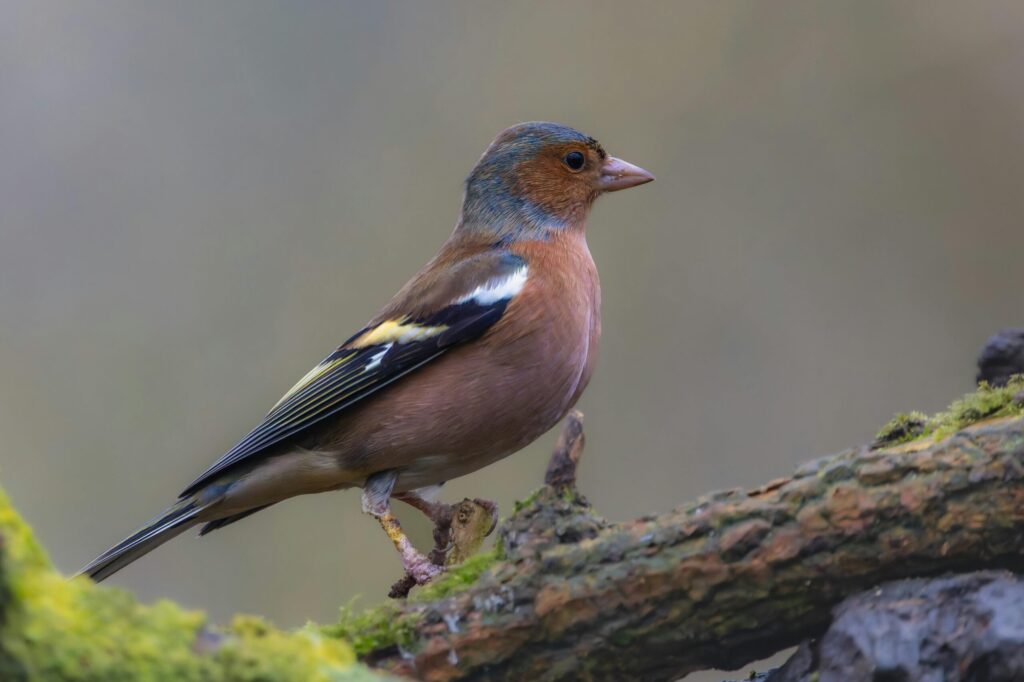
When you’re choosing binoculars for bird watching, magnification and how it affects your viewing distance are key considerations. I generally recommend sticking with 8x or 10x magnification. While 12x might seem appealing, it’s often too shaky to use comfortably without a tripod. A 10x binocular brings a bird ten times closer, usually enough for identification at reasonable distances.
Don’t go overboard with power, though. Higher magnifications narrow your field of view, making it harder to find and follow birds, especially when they’re flitting through trees. Typically, a 1000-yard field of view falls between 300 and 400 feet.
Objective Lens Size
Understanding how magnification impacts your view is important, and equally so is considering the objective lens – the larger lenses at the front of the binoculars. I need you to know that a larger diameter, like 42mm, collects substantially more light, giving you a brighter image. If I’m birding at dawn or dusk, I’d recommend 42mm or larger. Smaller, 25mm lenses work well in bright daylight, but struggle when light is limited.
However, bigger lenses mean added weight, 42mm binoculars typically weigh around 1–1.1 lbs, while compact 25mm models are closer to 0.6 lbs. Lens size also impacts the exit pupil – 42mm at 8x yields 5.25mm, while 25mm at 12x provides about 2.08mm. Don’t forget multi-coatings, they’re essential for maximizing light transmission and color, especially on lenses 40mm and larger.
Prism Quality Matters
Because prisms play a crucial role in image quality, you’ll want to pay attention to the type and quality when selecting binoculars. I recommend prioritizing BAK4 prisms; they’re made with barium crown glass and deliver a round exit pupil, resulting in sharper, higher-contrast images compared to BAK7. BAK7’s lower refractive index often causes dimmer edges and vignetting, especially when light is low.
If you’re considering roof-prism binoculars, understand they need phase-correction coatings. Without these, you’ll lose significant image detail and sharpness. Porro-prism designs usually excel in light transmission and 3D image depth because they don’t require phase coatings.
Ultimately, the prism material and its coatings directly impacts how much light reaches your eye. Look for dielectric or silver mirror coatings, they boast reflectivity exceeding 99%, brightening your view.
Coatings For Clarity
I’ve found advanced fully multi-coated optics deliver the brightest, highest-contrast images. Look for green films on objective lenses and blue on eyepieces, they minimize reflections and boost color accuracy, helping with identification. Broadband coatings reduce flare when facing bright sources.
Don’t underestimate quality, pairing high-grade BAK4 prisms with fully multi-coated optics gives appreciably brighter views and richer detail, crucial for spotting camouflaged birds in dim forests.
Waterproof And Fogproof
Protecting your investment and ensuring clear views requires binoculars to be waterproof and fogproof. I always check for O-ring seals, as they’re essential for keeping rain, splashes, and even accidental submersion from damaging the internal optics. Don’t just assume they’re waterproof, look for an IPX rating. An IPX7 rating, for example, guarantees the binoculars can handle being submerged in one meter of water for half an hour.
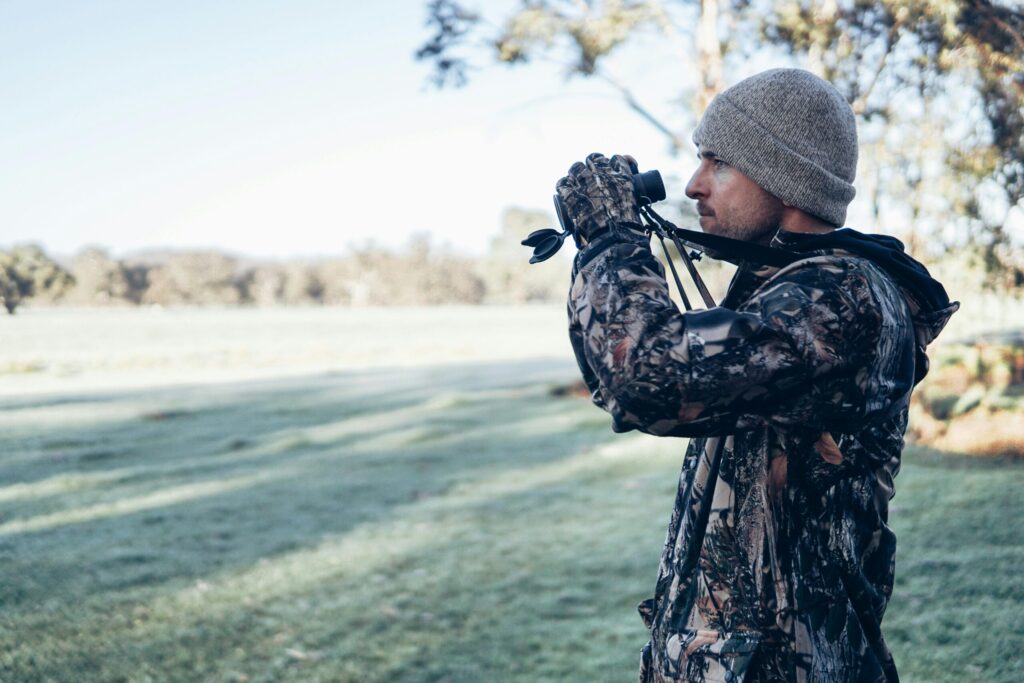
Fogging is another issue I consider, especially when birding in varying temperatures. Nitrogen or argon purging displaces humid air, preventing internal lens fog. This is imperative in humid climates or when shifting between indoors and out. Proper sealing isn’t just about protection, it maintains optical clarity and prevents corrosion and fungus growth inside the barrels.
Ergonomics And Weight
When you’re holding binoculars for extended periods, especially while tracking birds, their ergonomics and weight become incredibly important. I’ve found that keeping strain to a minimum is key to enjoying long birding sessions. Look for binoculars weighing around a pound or less, this markedly reduces arm and neck fatigue.
An ergonomic design isn’t just about comfort, it’s about stability. I prioritize a comfortable grip that allows for steady viewing, minimizing hand fatigue when I’m trying to focus on a distant bird. Compact binoculars are easier to carry on hikes and travels, making them more practical.
Don’t overlook weight distribution. Well-balanced binoculars help me maintain a stable view, vital for following fast-moving subjects. These factors directly impact how long and comfortably I can observe.
Eye Relief Needed
Comfortable handling directly affects your ability to locate and focus on birds, and a key component of that comfort is proper eye relief. I need to explain what this is: it’s the distance my eye can be from the eyepiece and still see the entire image. If you wear glasses, you’ll want to pay close attention.
Generally, I find at least 15–16 mm of eye relief essential for comfortable viewing, with eyeglasses. Longer relief, around 18–20 mm or more, is even better, offering a wider, easier-to-find image, especially during long birding sessions.
Shorter eye relief, below 15 mm, often means I’m pressing my eyes right against the rubber eyecups, which isn’t ideal. Make sure any binoculars I consider have adjustable eyecups and sufficient relief to maintain the advertised field of view while wearing my glasses.
Tripod Compatibility Options
To get the clearest views, especially with higher magnification, you’ll want to factor in tripod compatibility. I find a tripod essential when using 12x binoculars, as they’re difficult to hold steady. Check if your chosen model has a built-in 1/4″-20 thread on the central focus wheel housing, some compacts don’t include a tripod adapter and require a separate purchase.
Full-size 42mm binoculars generally work better with tripods. I’ve noticed models between 1.1 and 1.5 pounds are easily supported by lightweight travel tripods with ball heads. If you digiscope, look for setups with 360° rotatable ball heads and quick-alignment phone clamps. Don’t overlook eye relief, I recommend 15–20mm and adjustable eyecups for comfortable viewing when you’re in a fixed position.
Frequently Asked Questions
How Do I Clean the Lenses Without Damaging Them?
I gently use a bulb blower to remove dust, then I breathe on the lenses to fog them and wipe with a microfiber cloth in circular motions. Don’t press hard,
Can Binoculars Help With Identifying Bird Sounds?
I don’t think binoculars directly help with sounds, but they’ll allow you to see the bird making them! Focusing on its behavior and location, which I can do with these, often enables identification. It’s a visual aid for auditory learning.
What’s the Best Way to Store Binoculars Safely?
I always store my binoculars in their padded case when I’m not using them. You should keep it in a cool, dry place, don’t leave it baking in the sun! I also suggest a desiccant to prevent mold.
Are Expensive Binoculars *Always* Better for Birding?
No, I don’t think they are. While pricier binoculars often boast superior glass and coatings, I find a good mid-range pair with proper specs delivers crisp, bright images, more than enough for identifying birds. It’s skill, not cost, that truly matters.
How Can I Adapt Binoculars for Use With Glasses?
I adjust the eyecups down fully, they’re usually twist-up. This brings the optics closer to my eyes, letting me see the full field of view with my glasses on. It’s a simple fix, honestly.