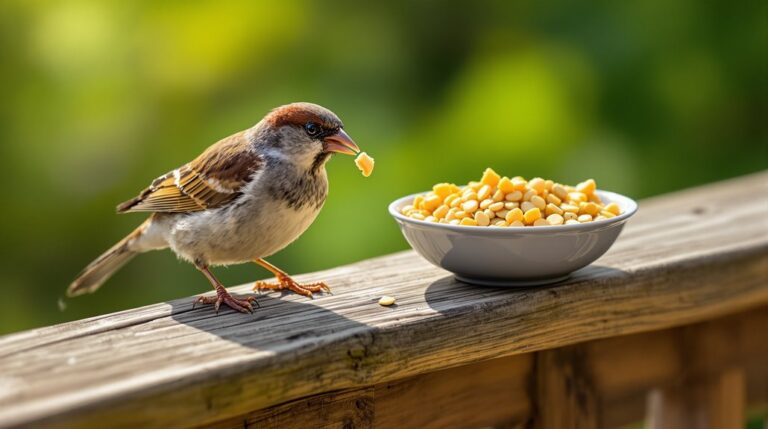
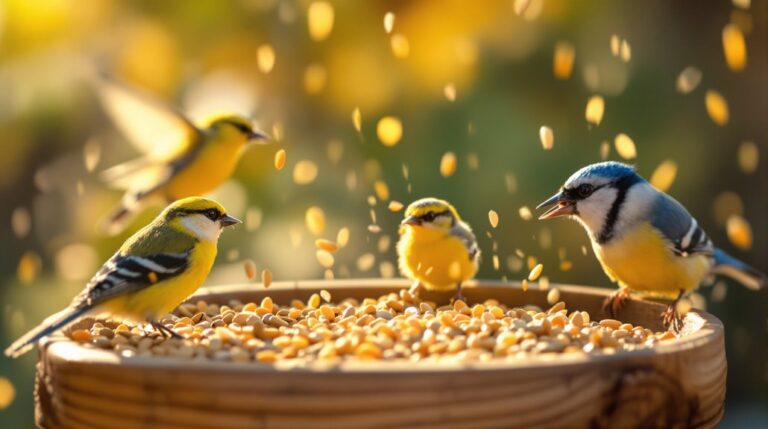
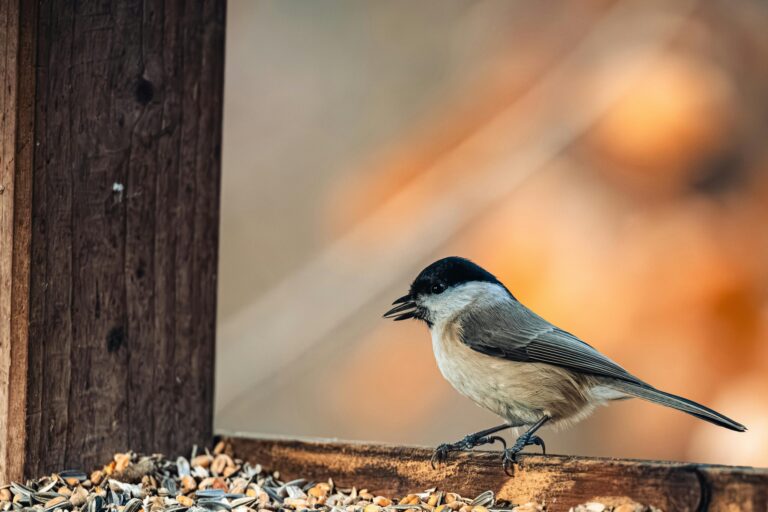
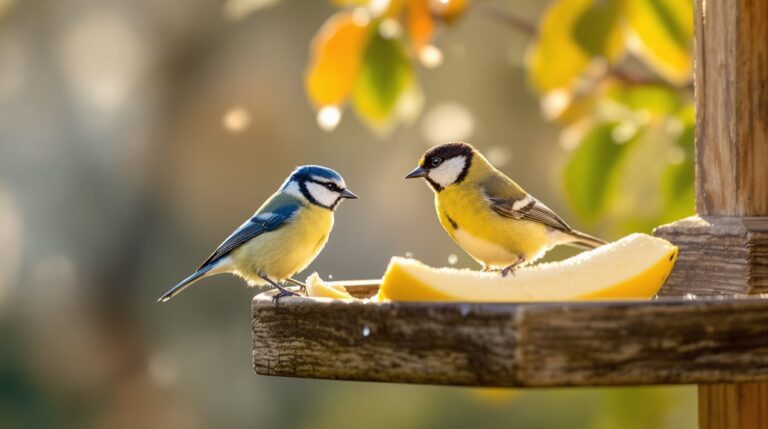
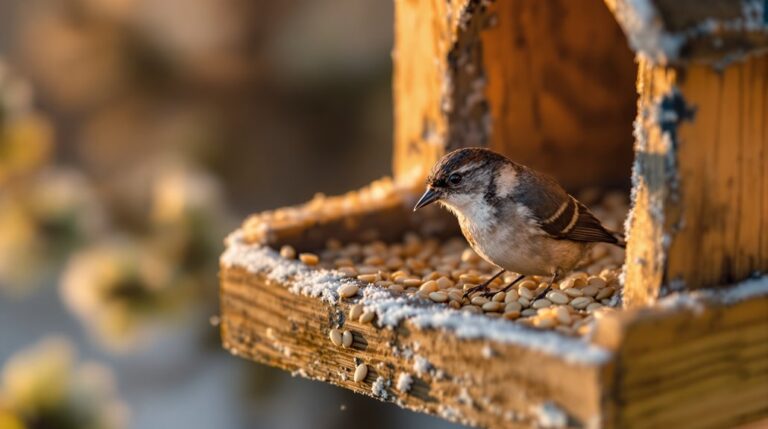
What Fruit Can Birds Eat? Let me show you.
You can start with friendly fruits birds love, like apples, berries, and grapes, but you should prep them right.
Remove seeds and pits, cut into bite sized pieces, and offer fresh or unsweetened dried fruit hydrated a bit.
Avoid sugar, salt, and chocolate, and clean feeders daily with mild soap.
Put out small portions each day to reduce waste, and you’ll see curious visitors show up soon for a tasty, safe treat.
Safe Fruits for Backyard Birds
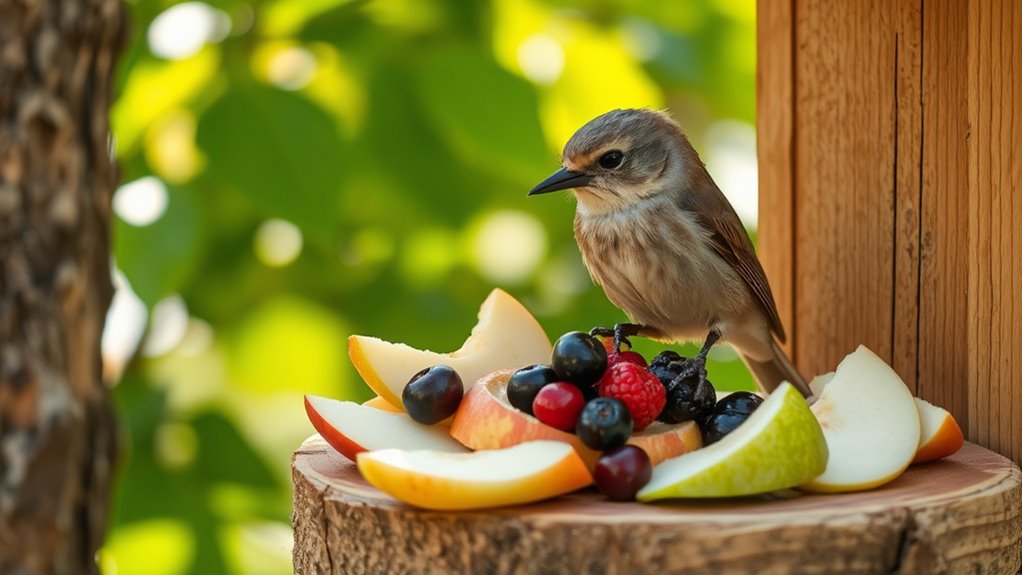
Safe fruits for backyard birds are easy to share and fun to mix into treats, so you’ll both enjoy feeding time. Use apples, cranberries, or raisins as simple options, and avoid pits or seeds that can upset tummies. Place fruits where birds can see them and add small portions to prevent waste, encouraging safe fruit placement. Natural sources of fruit come from your garden or store, and you can mix peaches or grapes for variety. Keep treats fresh, rinse berries, and clean feeders regularly to support healthy visits. You’ll discover natural sources reveal colors, and birds become curious visitors daily. Kaytee NutFruit Wild Bird Seed includes raisins and cherries for added appeal and to attract fruit-loving birds like cardinals and chickadees. A fast, accurate autofocus system helps photographers capture clear images of birds feeding on these fruits.
Fruits That Attract Cardinals, Finches, Bluebirds, and More
Now that you know safe fruits, you can focus on which ones attract cardinals, finches, bluebirds, and more. You may notice cardinals love cranberries and raisins, while finches enjoy apples, grapes, and cherries. This mix helps you plan feeders, since cardinal preferences lean toward bright berries and sturdy fruits. Finch diets include small berries and chopped pieces you can offer in a shallow dish. Choose fresh, pesticide-free options, cut into bite-size chunks, and avoid pits that could harm birds. Place fruit in safe spots, clean regularly, and watch how quickly the backyard becomes a lively, tasty scene. For the sharpest images when photographing visiting birds, use a fast shutter speed of 1/1000s or faster. Capturing these moments clearly benefits from a camera with strong continuous autofocus performance to track fast-moving birds.
How to Prep Fruit for Birds (No Sugar, No Seeds)
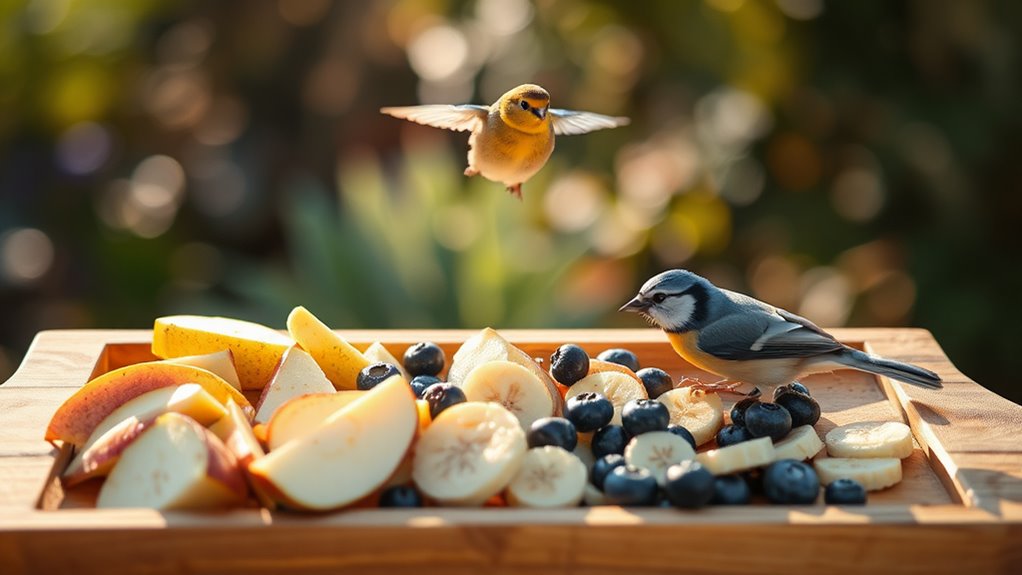
Getting started is easy: use fresh fruit or moisten small dried pieces, but skip all sugar. Wash fruits first, cut them into bite-sized chunks, and remove pits to keep birds safe. For dried options, choose unsweetened pieces and hydrate with water for a few minutes before serving. For drying methods, know safe textures, then pick your favorite style for variety. Note soaking times matter, so adjust based on fruit size and dryness. Keep portions small, offer daily, and watch birds visit with curious, cheerful chatter. You’ve got this, bird feeder buddy. Happy bird watching.
Fruit Nutrition for Birds: Benefits and Considerations
Building on the prep tips you learned earlier, learning how fruit fuels birds makes feeding birds feel rewarding and fun. You can offer apples, berries, and oranges to support vitamins and keep bodies strong. For digestive health, choose fiber-rich fruits like strawberries and bananas, cut into bite-sized pieces. Remember to remove pits and rinse fruit, then offer small portions at a time to avoid waste. You can mix in a few raisins or cranberries for quick energy during migration, but watch sugar and moderation. If you keep notes, you’ll learn what works for your birds and your yard.
Seasonal Fruit Ideas and Easy Substitutions
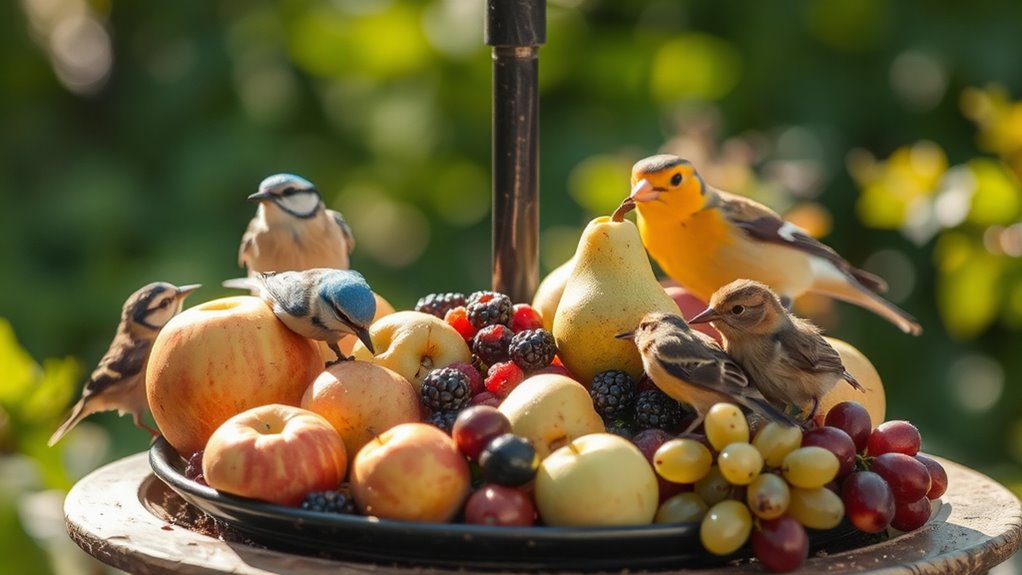
As the year shifts, swap fruits to match each season to keep snacks fresh. In fall, choose apples, grapes, and cranberries, cut into easy bites, and mix with raisins for quick energy. Winter options include oranges, apples, and berries thawed from freezer snacks, plus soaked raisins and cranberries. If some fruits aren’t ripe, substitute kiwifruit or grapes, and mix with yogurt cups for a fun treat. Keep it simple: wash, chop, and offer only fresh or properly soaked fruit, changing choices weekly to stay curious. Fall offerings, Winter options, and helpers make this hobby easy.
Common Feeding Mistakes to Avoid and Fixes
If you want birds to love your feeder, steer clear of common mistakes. First, avoid toxic additives like salt, sugar, chocolate, or processed foods. Remove mold and never offer moldy fruit again. Keep fruit fresh, cut into bite-sized pieces, and vary options to attract more species. Clean feeders regularly, wash with mild soap, and rinse well to avoid bacteria. Be mindful of sugar content and avoid overfeeding, which can cause digestion issues and waste. With consistent habits, you will see lively visits and healthier birds. If unsure, ask a local birder friend or check trusted guides for fruit choices online.
Frequently Asked Questions
Are Citrus Peels Safe for Backyard Birds?
Are citrus peels safe for backyard birds? Generally, no. Citrus peels are acidic and can irritate birds’ digestive systems, especially if pesticides linger on the rind. If you choose to offer them, wash peels thoroughly, remove any pesticides, cut into small pieces, offer sparingly, and monitor birds for swallowing, drooling, vomiting, or distress.
Are Dried Fruits Acceptable Without Added Sugar?
Yes, dried fruits without added sugar are acceptable in moderation. Soaking can help reduce choking hazards and digestive upset. Remember that raisin nutrition matters, and apricot suitability supports vitamins while keeping the sugar load reasonable for birds.
Do Birds Prefer Colors When Choosing Fruit?
Yes, birds use color and visual cues when selecting fruit. They tend to notice brighter reds and yellows and high-contrast patterns, which guide them toward ripe, accessible options and help speed up feeding decisions.
How Long Can Fruit Sit Before Molding or Spoiling?
Fruit can sit for about 2 to 7 days, depending on the type and storage conditions. Check for spoilage signs such as spots, mold, or off smells. Refrigerate berries and cut fruit promptly to extend shelf life.
Is Moldy Fruit Always Unsafe for Birds?
No, moldy fruit isn’t always fatal, but it’s generally unsafe for birds because mycotoxins from mold can harm them. Do not feed moldy fruit, discard it and avoid giving any moldy portions to protect your birds’ health.
Conclusion
Feeding birds with safe fruit is simple and fun, and you’ll notice life daily right in your yard. Keep portions small, wash the fruit before serving, and cut it into bite-sized pieces so little beaks can enjoy them easily. Remove pits and seeds, skip sugar and salt, and clean feeders regularly. Try apples, berries, and grapes this week, then mix in oranges or cranberries as the season changes. You’ve got a tasty hobby that helps birds thrive.