“Can Birds Eat Crackers” is a question many people have about feeding birds, and the truth is not really good for them, even if they look tasty.
You feed them salty snacks, and that can make thirst or dizzy feelings worse, plus they miss real nutrients.
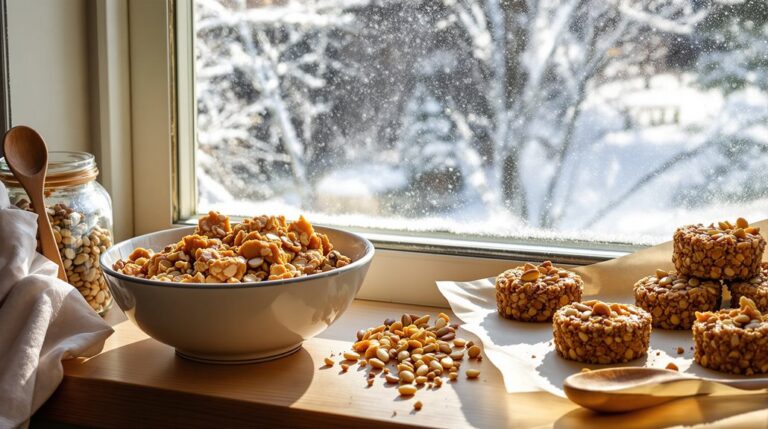
Instead, try small oats, seeds, or fruit bites, which give energy and protein without risky additives.
There are simple, kind ways to share snacks with feathered friends, and you’ll learn more soon.
Why Feeding Crackers to Birds Is Problematic
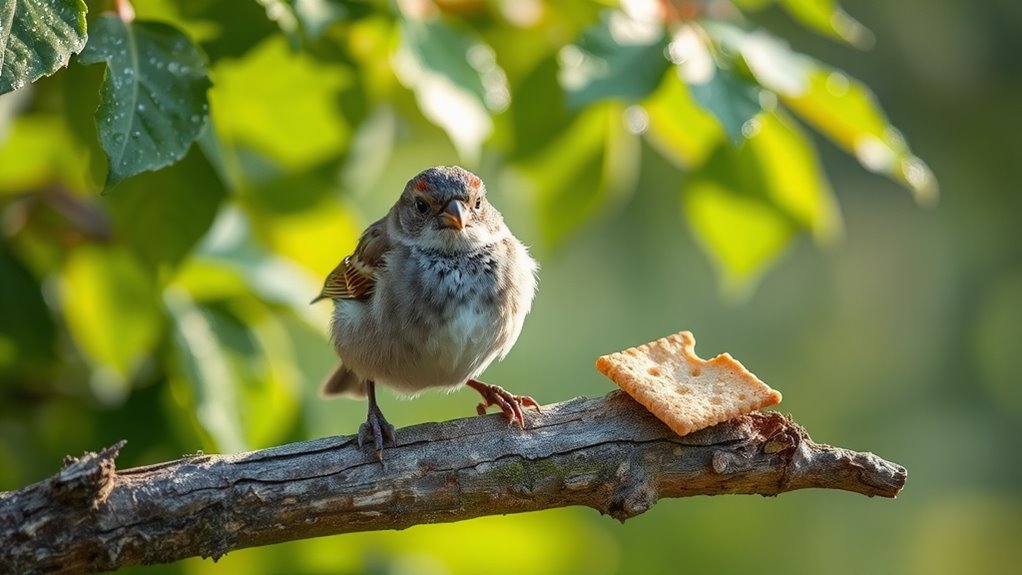
Crackers may seem tasty to birds, but they cause health problems. Sharing may seem kind, but it backfires. Crackers contain too much salt and simple carbohydrates, which can make birds thirsty, dizzy, or nauseated after snacking. The harm is unintentional, not malicious, and it sneaks up as dietary balance is disrupted. Keep treats tiny and occasional, provide water, and choose safe alternatives like oats or seeds. By keeping meals natural, you protect your bird while still enjoying time together with care. A better option is to offer nutritionally balanced wild bird food such as shell-free sunflower hearts. Using a sturdy tripod can help you observe birds more closely without disturbing them, promoting safer and more respectful wildlife interactions.
What Salt in Crackers Does to a Bird’s Body
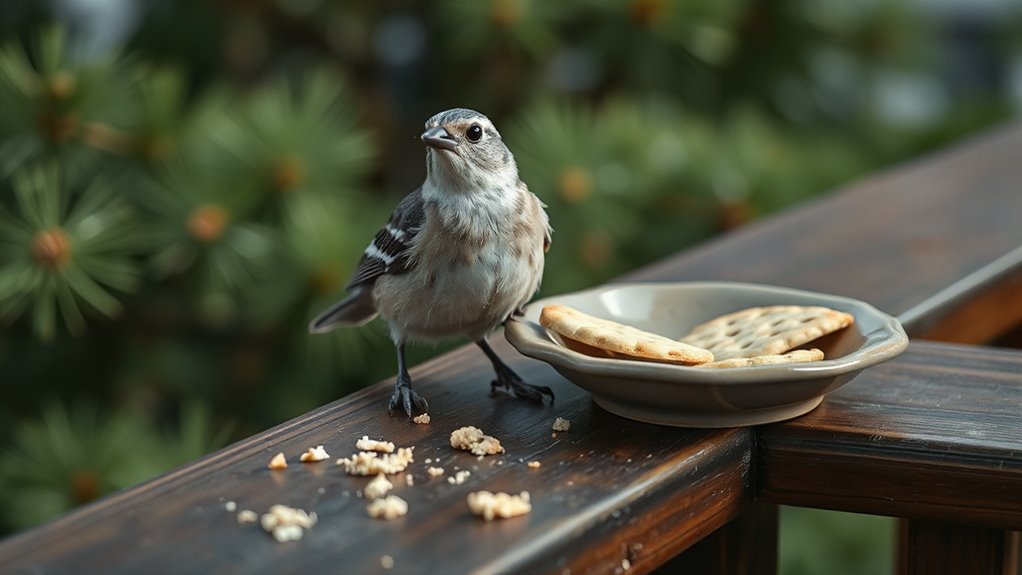
Salt in crackers hits a bird’s body quickly, causing thirst, dizziness, and stress. You may notice increased thirst, trouble balancing fluids, and a shaky mood after just a small bite. Salt can trigger electrolyte imbalance and even kidney issues if salty snacks are fed repeatedly. To keep birds healthy, choose low-salt options and offer safe treats like oats or cracked corn. When sharing crackers, opt for unsalted varieties and limit portions, pairing them with fresh water and natural seeds. A busy feeder can still be fun, tasty, and safe when you plan ahead for your feathered friends. Proper in-body stabilization helps photographers capture steady, clear images of birds without causing disturbance. Using a lens with optical image stabilization (OIS) can significantly improve shot clarity when photographing birds in motion.
Which Nutrients Crackers Fail to Provide for Birds
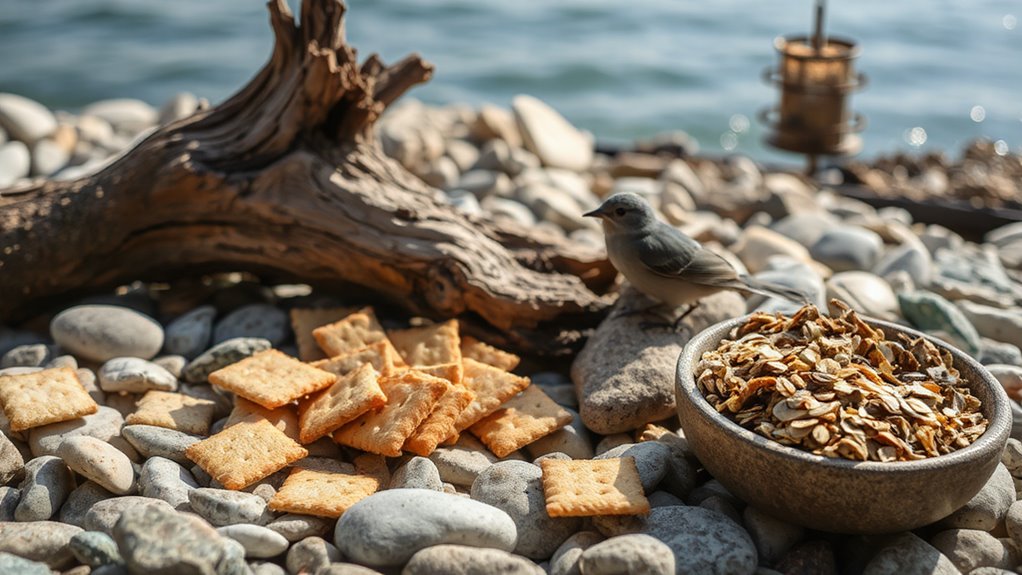
Even though crackers are tasty, they don’t provide the nutrients birds rely on. You want a snack that keeps energy steady and feathers shiny, right? Crackers often miss protein and certain vitamins, leaving birds tired after short flights. Instead, choose oats, seeds, and chopped greens that deliver real fuel and steady calories. You can mix a little fruit for flavor, and offer water to stay hydrated. Keep portions small and swap salty bits for unsalted options. Remember, your birds deserve balanced treats, so enjoy feeding them in a safe, simple, and consistent routine. Here’s to happy, healthy friends.
How Crackers Can Disrupt a Bird’s Digestion
Because birds can’t digest salty snacks like we can, crackers disrupt their digestion. You may notice increased thirst, and their crop can swell from soft bits. If pieces stay overnight, you might see crop impaction, a real alarm that slows digestion and drains energy. A sour stomach can form when undigested crumbs ferment in the gut, making birds uncomfortable and weak. Keep snacks small, plain, and occasional, so they stay curious about real food. Offer oats, seeds, or greens instead, and observe the bird’s behavior. Your care helps these tiny helpers stay lively and safe, and it also helps feathered friends trust you.
Additives in Crackers That Threaten Birds (e.g., Xylitol)
Some cracker additives can seriously threaten birds, especially the sweetener xylitol and other artificial ingredients. Xylitol toxicity can cause sudden drops in blood sugar and liver damage, even in very small amounts. Watch for artificial flavors and preservatives, because birds can swallow tiny bits and get sick. When you snack, choose plain, unsalted crackers, or better yet skip crackers and offer safe treats like grains, seeds, and clean water. If you see a bird near crackers, remove them and wash the area, then offer safer foods and plenty of fresh water.
Moldy Bread and Crackers: Disease and Airborne Risks for Birds
Moldy bread may seem like an easy snack, but it poses real risks. Skip it and keep your feeding area clean so birds stay curious about safe options. Mold carries fungal spores that can irritate lungs and trigger diseases like Aspergillosis, especially in crowded feeding spots. Spores aren’t always visible, but they can float in the air as mold grows. If you spot mold, discard the item, disinfect surfaces, and offer fresh seeds or oats instead. For outdoor feeding, store bread airtight and monitor leftovers to prevent moldy surprises. Keep treats friendly and mold-free always.
Safer, Bird-Friendly Feeding Options for Backyard Birds
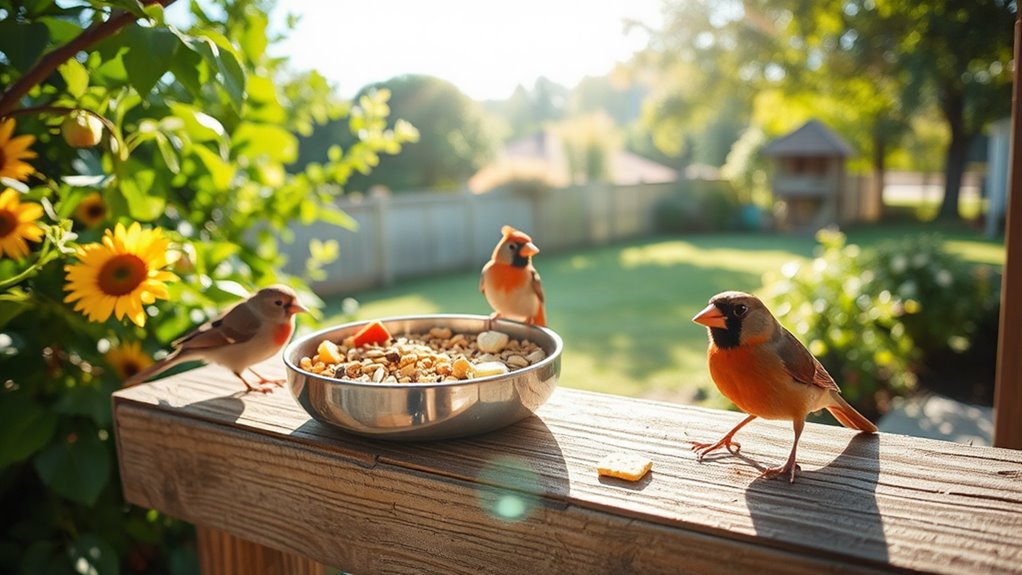
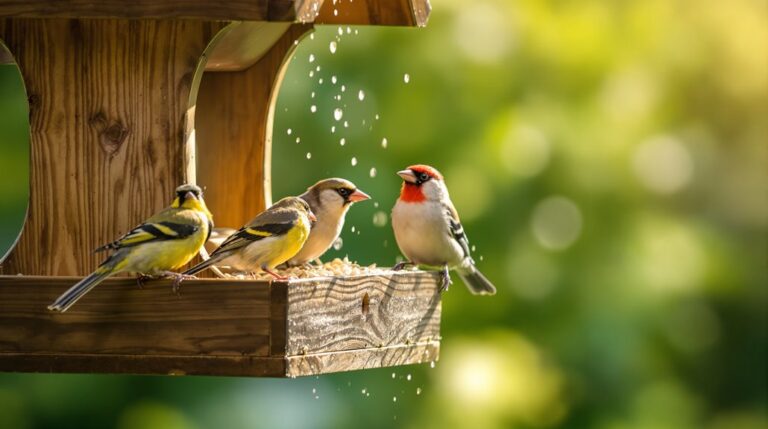
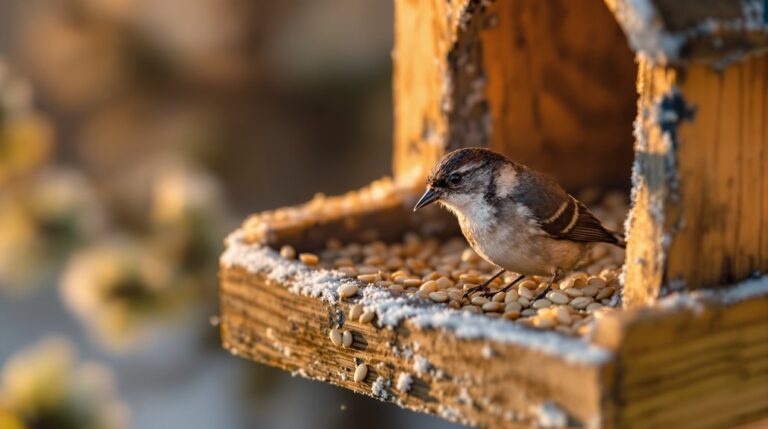
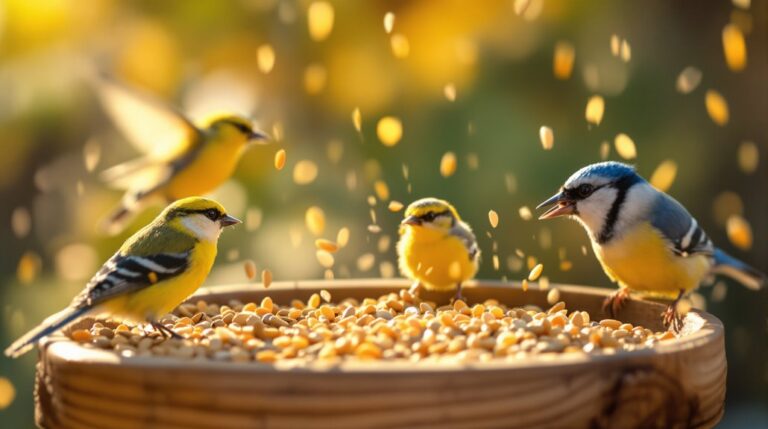
While treats may be fun to share, safer options keep backyard birds healthy. Start with simple seed mixes that blend small grains with seeds birds recognize. Offer fruit pieces like apple chunks or berry halves to add moisture and vitamins. Keep portions small and fresh to avoid spoilage. Provide a shaded feeder, clean trays daily, and avoid salted snacks, which can harm them. By choosing natural options, you protect birds while enjoying their visits. Seed mixes and fruit pieces help steady energy, support migration, and spark curious pecks.
Best Practices for Feeding Wildlife Responsibly at Home
At home, you can responsibly help wildlife by following simple feeding habits. Use natural foods such as seeds, oats, and fruits; avoid salty snacks or bread. Check local regulations before feeding and avoid areas with sensitive habitats. Minimize habitat impact by keeping a clean feeder, disposing of scraps properly, and washing hands after handling bird food. Observe birds for signs of stress and switch to wildlife-friendly alternatives if problems arise. Feed only during daylight, in small amounts, and do not chase birds away from their natural routines. Enjoy wildlife feeding responsibly, keep trash out of the environment, and stay curious.
Frequently Asked Questions
Is There a Safe Amount of Crackers Birds Can Eat?
There is no safe amount of crackers for birds. If you choose to offer them, limit to a tiny, infrequent portion. For birds, keep cracker exposure minimal and prioritize nutritious foods instead; offer crackers only very rarely, as an occasional treat rather than a habit.
Can Crackers Cause Sudden Death in Small Birds?
Yes, feeding crackers to small birds can cause sudden death. The salt and toxins in crackers can lead to organ failure and electrolyte imbalance, especially in smaller species. Avoid giving them crackers and choose safer, healthier foods to protect their heart, kidneys, and overall survival.
Are All Crackers Equally Risky for Birds?
No. Cracker risk to birds varies with ingredients and processing. Salty, moldy, or sugary crackers pose greater danger, while unsalted or plain varieties are safer. When possible, choose plain, unsalted options.
What Signs Indicate a Bird Ate Too Much Salt?
If a bird eats too much salt, watch for lethargy, tremors, vomiting, excessive thirst, rapid breathing, weakness, or a collapsed posture, and seek veterinary care immediately to prevent kidney damage and potentially life-threatening complications.
Can Birds Safely Eat Crackers With Seeds or Whole Grains?
Yes, you can offer crackers that include seeds or whole grains occasionally, but limit salt, sugar, and artificial additives. Seed content can be beneficial in moderation, and grain digestion tends to be smoother when treats are balanced with fresh water and a varied, natural diet.
Conclusion
Feeding birds can be fun, but crackers aren’t the right choice. You can keep them healthy by offering oats, seeds, or fruit. Fresh water helps them stay hydrated and strong through busy days. Notice how birds stay curious when their meals fit their needs, not our snack cravings. Start simple, watch for digestion cues, and swap crackers for safer treats during snack time. You’ll enjoy bird watching more by helping them stay healthy.