How to Attract Birds to Bird Feeder? It’s easy.
You can attract birds easily if you pick the right feeder and seed.
Place it in a sunny, visible spot away from roads and predators.
Use black striped sunflower as a base, add nyjer for finches, and safflower for deterred squirrels.
Keep feeders clean, rotate blends weekly, and offer water during hot days.
Season changes matter, so adjust seeds and hang time, then see what surprises show up.
Set Your Feeding Goals, Then Pick a Feeder
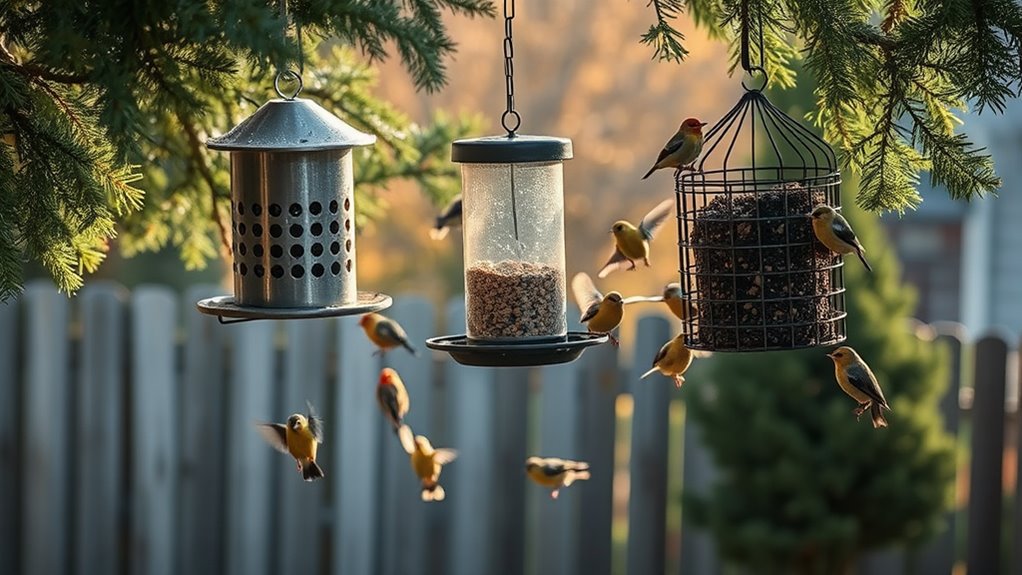
First decide what you want to see at your feeder, more sparrows, brighter finches, or a wider mix through the seasons. Clear goals make feeder selection easier. Set a realistic target, like a daily visitor count or a short species list, then choose a feeder that fits your aim. Feeder choice should align with your goals, not just aesthetics. Start with a platform or tube feeder, then tailor your setup by offering safflower or Nyjer to attract specific birds. You can test different combinations week to week. A shell-free sunflower hearts blend is ideal for minimizing mess and attracting finches, chickadees, and nuthatches. For those interested in photographing visiting birds, using a sturdy tripod can significantly improve image sharpness when shooting from a fixed location near the feeder.
Choose Seeds and Suet for Your Target Birds
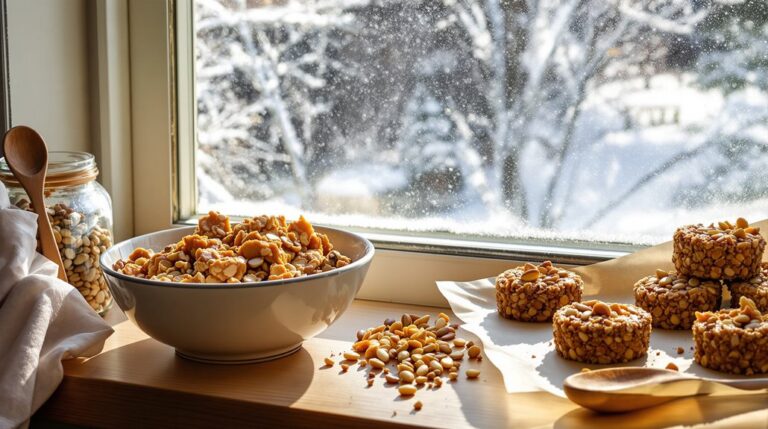
Depending on your targets, start with a base stash of black-striped sunflower seeds. Mix in seed blends to attract a wider range of birds and keep everyone interested, and add simple suet recipes for winter visitors. If you want finches, try Nyjer and small-port blends, plus safflower to discourage troublesome species. For larger birds, include sunflower chips or hearts and a basic suet cake with peanut bits. Keep feeders clean, rotate seeds, and observe who arrives, then adjust. Seed blends and suet recipes make feeding fun and easy for beginners every day. A fast, accurate autofocus system is essential when photographing birds that visit feeders, ensuring sharp images even during sudden movements. Cameras with an APS-C sensor offer superior image quality and enhanced telephoto reach, making them ideal for capturing detailed shots of feeder birds in various lighting conditions.
Place Feeders for Visibility, Safety, and Activity
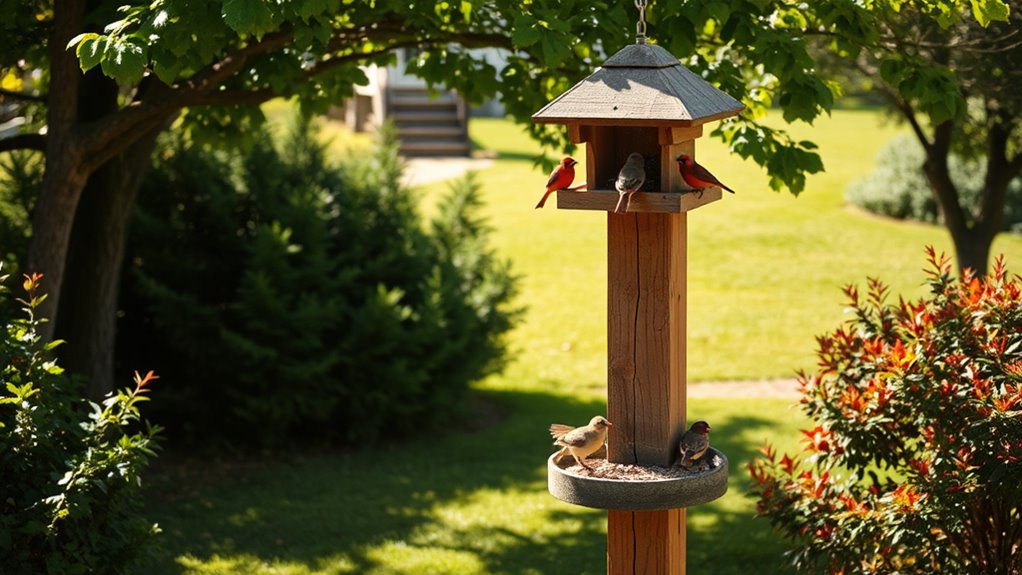
Choose a sunny, visible spot where you can watch feeders from inside, but keep them away from roads. You’ll notice activity, and that helps you learn which birds visit most often. Feeder placement matters, so place feeders at eye level or slightly higher for better visibility from windows, yet not so high that it’s hard to refill. Keep bird safety in mind by avoiding predators and using sturdy mounts, plus cleaning regularly to prevent disease. Use a mix of feeder styles to invite different species, and a simple trail of seeds shows you what works best for your yard.
Prevent Squirrels and Pests Without Fussy Setup
You can keep squirrels and pests from spoiling your bird fun with simple, no-fuss gear. Choose baffle systems to block jumpy rivals and place feeders in open, sunny spots for quick visibility. Cage feeders keep seed safe from pests, while easy cleaning makes every visit pleasant. If weather bites, swap to safflower or cracked corn in a covered tray. Keep the setup simple, and your feathered friends will visit with smiles. Start with a single clean cage feeder and move it closer to shelter as you learn who comes. Monitor, clean weekly, and adjust placement for best results. Always.
Seasonal Tweaks: What to Change by Weather and Time of Year
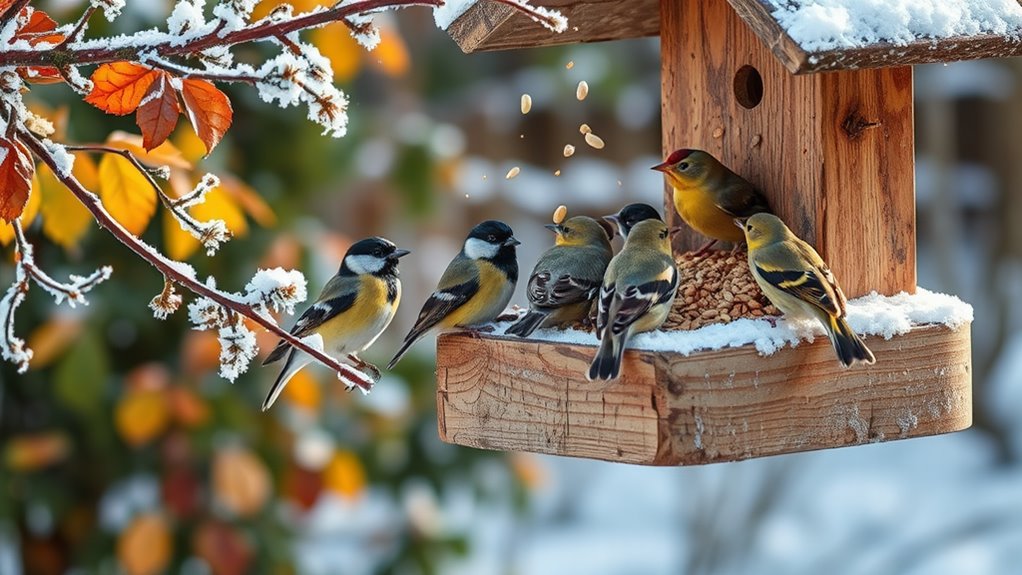
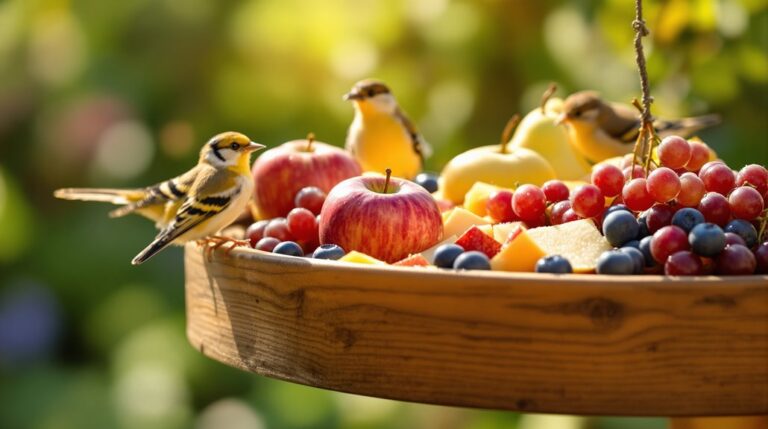
As seasons shift, you can tweak your feeder setup to keep birds happy all year. In winter, switch to winter provisions like sunflower hearts and safflower, and add a sheltered perch so chilly mornings feel cozy for your feathered guests. In spring, opt for lighter mixes and fresh fruit scraps to invite newcomers, while keeping cleaning routines simple to protect health. In summer, provide steady water access and resilient, easy-to-clean blends, and adjust feeder heights to suit visiting species. In autumn, introduce energy-rich blends to help with migration prep and pre-winter stamina, while preparing feeders for wind and rain. Monitor daily for hungry visitors, fine-tune feeds, and test different heights to see what birds prefer. These simple tweaks save money, boost visits, and keep the yard lively, friendly, and easy to enjoy together. Give it a try this season, friend.
Attract Specific Species With Targeted Foods
By tailoring foods to a bird’s tastes, you can reliably attract specific species to your yard. To target species, select foods that match their preferences and feed them purposefully. For finches, Nyjer or tiny seeds in small ports attract goldfinches and pine siskins; safflower deters blackbirds in tube feeders. For doves, white proso millet is a friendly option. For cardinals and grosbeaks, mix sunflower seeds with peanuts. Keep feeders clean and offer fresh mixes. With simple choices and steady feeding, you’ll enjoy regular visits and clear, rewarding results. Your yard will feel welcoming.
Keep Your Feeders Clean to Sustain Visits
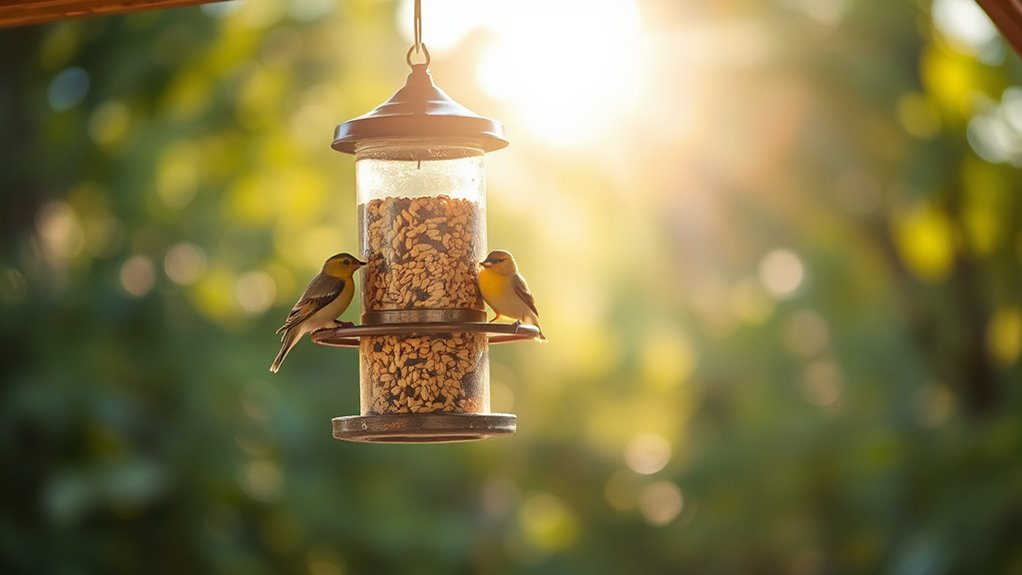
Keeping your bird feeder clean isn’t hard, and it pays off with more visits. You’ll attract more birds when you remove old seed, wipe surfaces, and rinse feeders weekly. Mold growth hides in damp corners, so dry everything thoroughly before refilling. Regular cleaning also cuts disease spread, protecting your feathered friends and your own enjoyment. Use hot, soapy water, then a quick rinse, and air dry completely. Check for cracked feeders and replace them, because clean, sturdy gear invites consistent visits. Schedule a quick monthly scrub, and turn cleaning into a simple, satisfying habit. No fuss, just happy birds.
Measure Results and Optimize Your Setup Over Time
Tracking what you see at the feeder helps you fine-tune your setup over time. You’ll notice which seeds attract more visitors, when visits peak, and which pests appear, so you can adjust. Record visits and note changes in birds after a switch, such as swapping safflower for sunflower hearts. Analyze data from a week or two, then try evidence-based tweaks, like moving feeders or adding a Nyjer port for finches. Keep it fun, share results with a friend, and celebrate small wins when more species stop by, stay longer, and visit more often each season.
Frequently Asked Questions
How Long Does It Take Birds to Start Visiting a New Feeder?
You’ll see feeders attract visitors within a few days to weeks, but timing varies. Practice patience and persistence: keep seed available, keep feeders clean, and keep them visible, and avoid frequent changes; birds notice routine and rewards with time.
Should I Rotate Seed Types Weekly or Mix All at Once?
Mix at once; it maximizes seed preference across species and helps adapt to seasonal changes. Rotating weekly risks birds leaving. Keep safflower or Nyjer for attracting visitors, and offer sunflower hearts for year-round appeal, adjusting as needed.
Do Feeder Color or Material Affect Bird Attraction?
Yes, feeder color and material matter. You can attract more birds with brighter finishes in plastic or metal, but dull tones may suit some species too. Choose a durable, weatherproof feeder housing to keep visitors returning throughout the season.
How Often Should I Replace Spoiled Seed to Prevent Pests?
Replace spoiled seed daily to prevent pests. Check feeders every few days, discard moldy mix, and wash and dry the feeder regularly. Prompt cleaning helps prevent mold growth and rodent attraction, reducing attractants and keeping birds safe.
Can Cats Influence Feeder Visits From a Distance?
Yes, predator presence can deter visits, since feline cues prompt birds to abandon feeders. You’ll see fewer arrivals when a cat lurks, so create zones that minimize predator presence and keep birds safe.
Conclusion
Keep it simple and have fun, attracting birds with a few thoughtful steps is easy. Set your goals, pick a feeder you like, and choose seeds that fit the birds you want to visit. Place feeders where they feel safe, and check for pests. Mix things up by season, rotate seed blends, and keep water available in warm months. Track who comes, adjust as needed, and enjoy the chattiness, colors, and wings right in your yard.