Finding out what to feed birds in winter from kitchen is easier than you might think, and you can start right away with what you already have.
You’ll mix high-energy seeds with fats like peanut butter or suet, add chopped nuts or dried fruit, and set out sturdy feeders that stay clean in cold weather.
Mealworms lure woodpeckers and chickadees, while shell-free sunflower hearts go fast.
Want a practical plan you can start this weekend, with tips you can trust? keep going.
Winter Birds’ Nutritional Needs
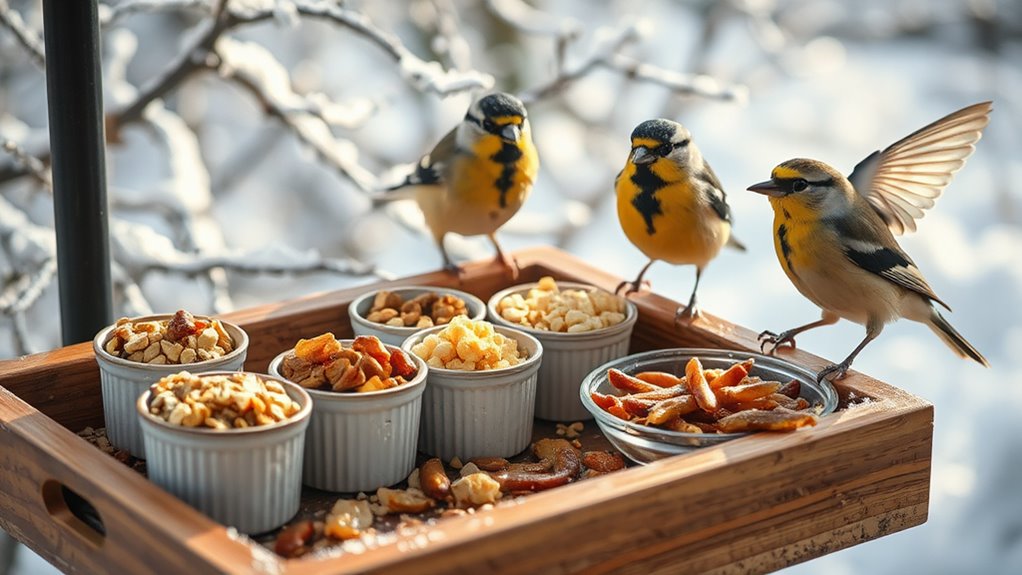
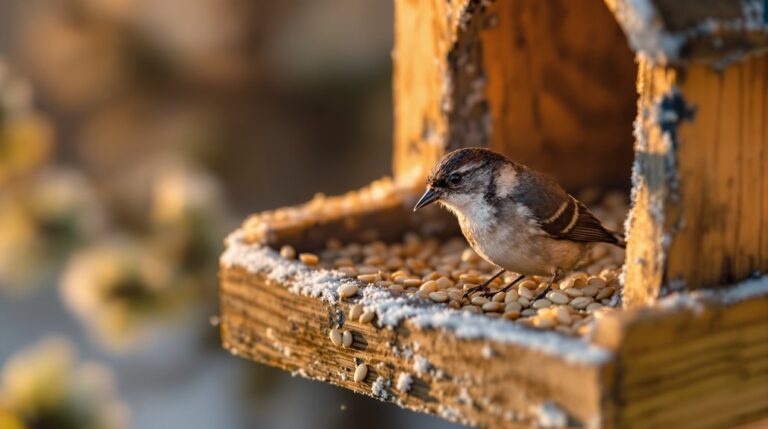
Winter birds need warm, energy-rich foods to keep their bodies and spirits humming all season. You’ll notice how tiny birds have higher energy demands than they seem, so offer high-calorie options gently. Fats and protein help build reserves to survive cold nights and windy days. Provide seeds such as sunflower and Nyjer, small chunks of cheese, and dried fruit to meet energy needs without fuss. Keep feeders clean, use gentle hanging methods, and offer small portions to keep feeding easy and enjoyable. You’ll enjoy watching visitors, involve your kids, and share nature’s gifts. Shell-free sunflower hearts provide 100% consumable energy and minimize messy hulls that can attract pests or foster mold. For those interested in capturing these lively winter visitors, using a telephoto lens with optical image stabilization can greatly improve the clarity of close-up shots taken from a distance.
Create Seed-and-Fat Mixes at Home
You can whip up seed and fat mixes at home with simple ingredients and steps. Start with seeds like black-oil sunflower and Nyjer, then add a fat mix to keep calories high on cold nights. Mix the seed components evenly and test fat ratios so the blend holds its shape but still pours easily from a scoop. Stir in dried fruit for sweetness and cheese or peanut butter for extra energy. Let the mix rest, then form balls or packs for hanging. This hobby is fun, simple, and helps birds all winter. Give it a try this weekend, you won’t regret it. Using a sturdy tripod or monopod can help you stay steady while photographing birds visiting your feeder in low winter light. For sharper images in dim conditions, consider cameras with strong low light autofocus performance, such as the Nikon Z6 III.
Safe Suet and Fat-Based Recipes for Winter
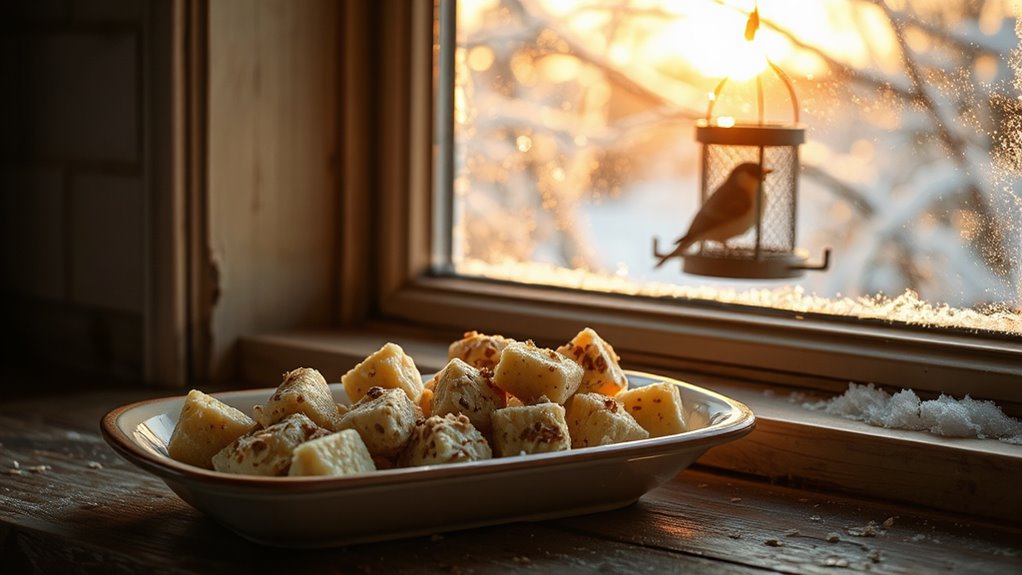
If you want simple, high-energy bird treats, start with suet and fat-based recipes. Mix lard or beef suet with seeds for a dense cake, then cool before hanging. Keep fat consistency right by melting slowly and adding the dry mix gradually, so it holds together without mess. Choose good ingredient sourcing so you use quality peanut butter, peanut pieces, and dried fruit. Peanut butter suet provides extra binding in cold weather, and you can swap cheese for additional fat when needed. Store leftovers in the fridge, and label batches for quick, tasty winter snacks you can share with birds.
Nuts and Insects: Protein Boost for Birds
Adding protein with nuts and insects makes winter bird feeding more exciting and effective. You can mix peanut butter into seed blends and spread it on pinecones to attract curious woodpeckers and chickadees. Mealworms provide a quick protein boost, especially on colder days when birds burn energy fast. Include unsalted peanuts and crushed nuts for texture and extra calories. Keep portions moderate and observe birds to avoid crowding. Use nyjer (thistle) seeds for small finches, then add a few insects for variety. Always offer fresh supplies and secure feeders against wind and rain. Your backyard will thank you daily.
Fruit and Dried Treats for Variety
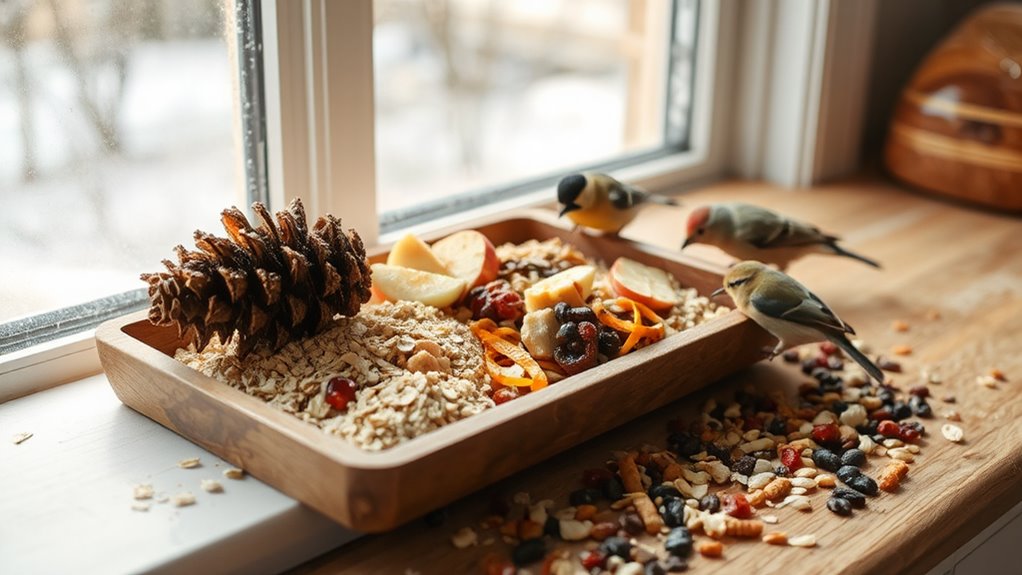
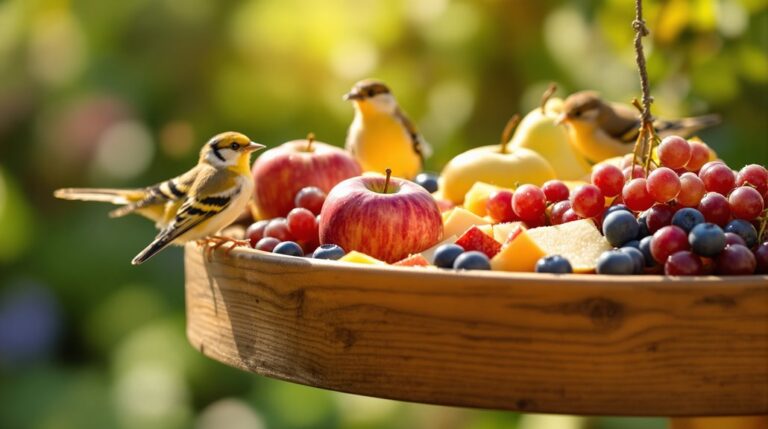
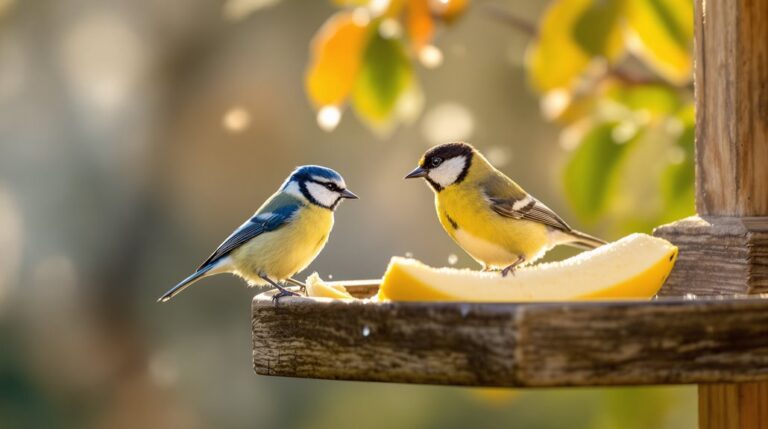
After the protein boost from nuts and insects, fruit and dried treats keep winter feeding lively and tasty. Fruit choices add color and sweetness, helping birds stay curious about your feeder. You can offer dried fruit chopped finely, or berries and grapes served whole for variety. Soaking methods boost softness, making treats easier for small beaks. Always soak dried fruit briefly, then drain well to avoid soggy mixes. Mix fruit with suet or seed blends for texture, energy, and fun. Vary offerings weekly to keep birds interested. Your winter routine stays simple and cheerful when you test what they like and adjust as you watch them return. They’ll thank you with bold visits and bright chatter daily.
Assemble, Store, and Hang Feeders Safely
Start by choosing sturdy feeders, then assemble them carefully to keep winter feeding simple and safe.
Place feeders where you can see birds but away from low branches where cats can reach. Use multiple heights for different species, and leave a clear path for refills. Clean and dry everything before filling, and store extra seed in airtight containers to stay fresh. Check hanging materials and hardware for wear; replace frayed cords or rusty hooks. Remember: feeder placement, hanging materials, and sturdy hooks matter for better reach and fewer spills. Enjoy watching chickadees and cardinals visit, chat with neighbors about your cozy winter birds, and smile at the simple joy.
Troubleshooting Common Winter Feeding Issues
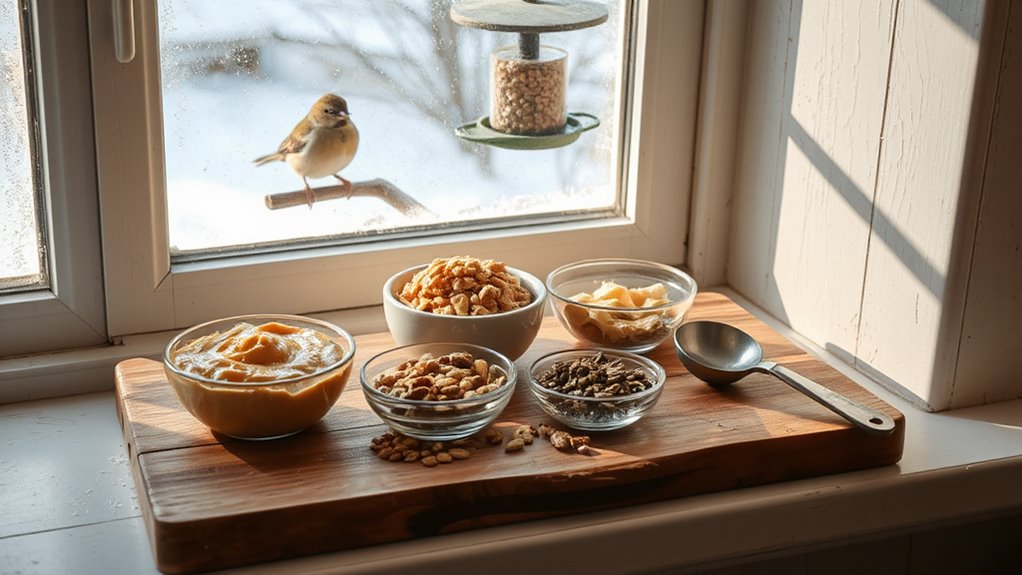
From that careful setup you already did, you’re ready to tackle common winter feeding issues.
In wet weather, practice sogginess prevention by drying mixes and avoiding soggy seed piles.
Keep feeders clean and replace old fat or seeds to prevent mold.
For squirrel deterrence, try a baffle, place feeders away from branches, and use hard-to-reach containers.
If birds stop visiting, refresh the mix, adjust portions, and keep a calm, inviting feeding area.
Slowly introduce any changes, watch for crowding or waste, and celebrate small birds as they discover your kitchen treats, proving winter can be safe, cozy, and fun.
Frequently Asked Questions
How Often Should I Refill Feeders in Deep Winter?
Refill feeders based on need, not on a strict schedule. Do regular checks, watch bird activity, and consider snow cover when deciding how often to refill. If feeders are empty or the contents are icing up, top them off promptly to keep birds fed.
Can Birds Eat Cheese as Part of Winter Diet?
Cheese can be offered sparingly, but lactose intolerance varies; use tiny grated bits only as a treat. It provides calcium, but prioritize seeds and suet for winter nutrition rather than dairy.
Are There Hazards With Frozen Water for Birds?
Yes. Frozen water poses hazards for birds: ice can trap or injure them, and very cold water can cause beak frostbite. To prevent injuries and dehydration, keep water unfrozen by changing it frequently, or use a heated outdoor bowl or bird bath.
How to Transition Birds to Homemade Suet Gradually?
Gradually shift by mixing small amounts of homemade suet into existing feeds, observe the birds’ response, and adjust texture and initial ratios accordingly. Start with a 1:2 fat-to-dry mix, and increase solids as the birds accept more.
Do Fat-Based Mixes Attract Pests or Mold?
Yes, fat-based mixes can attract pests such as squirrels and raccoons unless you use squirrel-resistant feeders and raccoon-proofing methods. Keep mixes fresh, refrigerate leftovers, and clean feeders regularly to limit mold and spoilage. This helps protect feeders in winter.
Conclusion
Keeping winter birds fed is fun and easy with simple meals from home. Mix sunflower seeds, peanuts, and dried fruit with a bit of lard or peanut butter for energy, then swap in suet cups to vary flavors. Check feeders weekly, clean them, and refill before storms hit so your feathered friends stay brave. Try treats like mealworms for protein, and watch woodpeckers and chickadees zoom in.