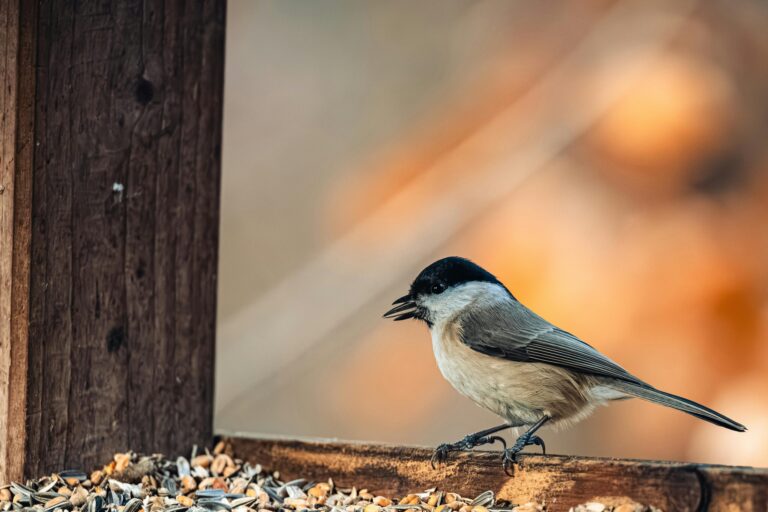
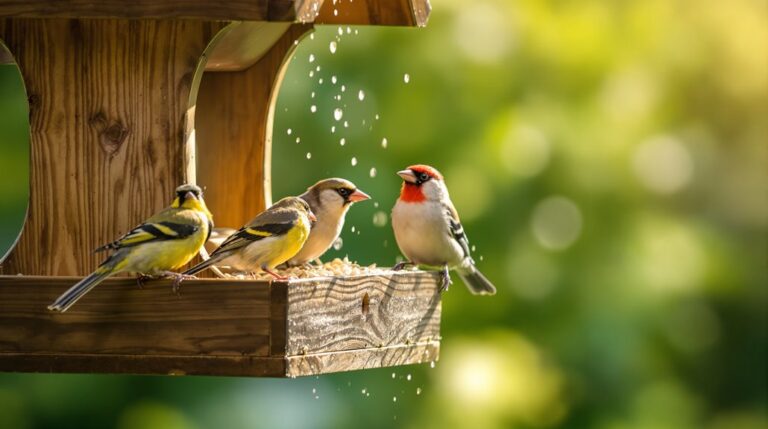
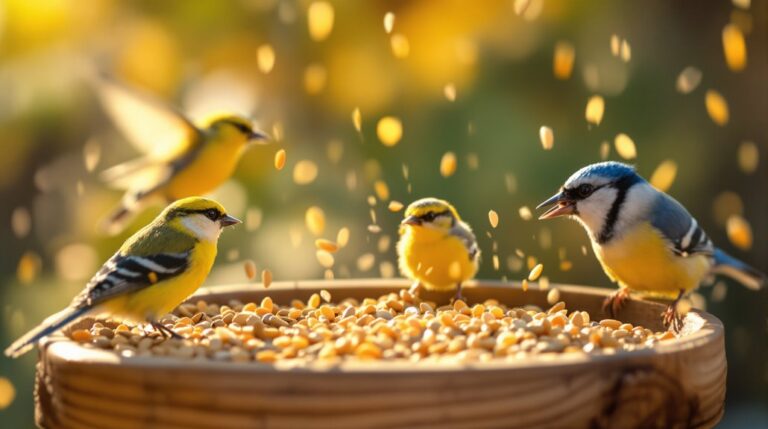
Can Birds Eat Cereal: you can feed birds cereal, but you choose carefully to keep them healthy, curious, and enthusiastic at your feeder.
Pick plain, unsweetened oats or whole grains mixed with seeds, and offer small crumbs a few times a week, with fresh water nearby.
Skip sugary or salty cereals, chocolate, or marshmallows, and avoid giant portions.
Start simple, then adjust, rotating with seeds for balance, and watch how the birds respond as you fine tune your routine.
There’s more to learn after this.
What Cereals Are Safe to Feed Wild Birds and Why?
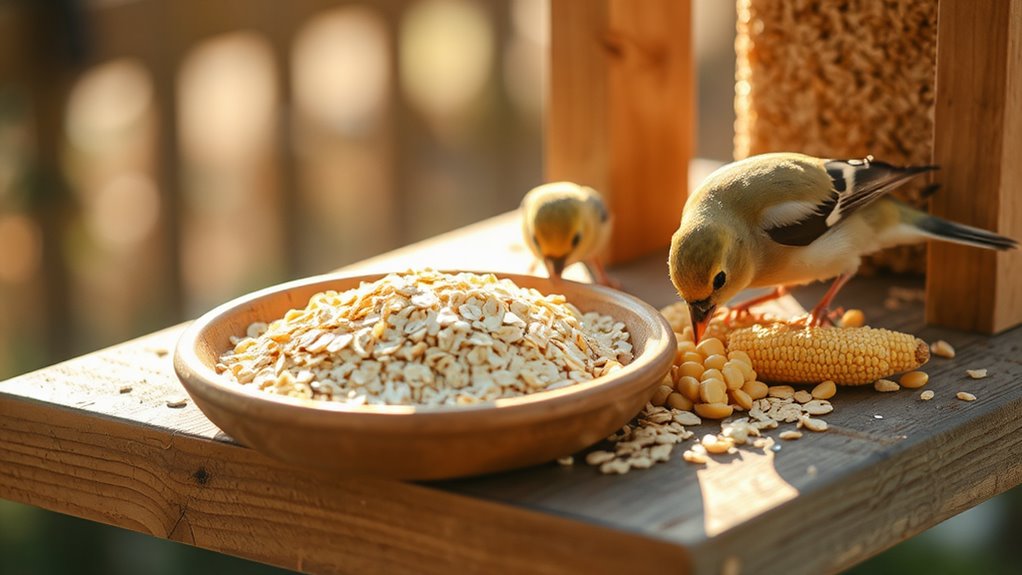
When you feed wild birds, choose safe cereals that are simple and healthy for them. Good options include plain oats and whole grains. Opt for unsugared varieties, break them into crumbs, and spread them on a clean surface to attract robins, jays, or chickadees. Keep portions small, mix with seeds, and avoid salty or sugary cereals to protect their health and keep every visit enjoyable. A balanced diet supports nutritional needs during seasonal changes and breeding periods. For those observing birds up close, using a sturdy tripod can greatly improve visibility and tracking without disturbing their natural behavior.
Which Cereals to Avoid for Bird Health and Safety?
Avoid cereals that load birds with sugar, salt, or risky additives, and your feeder stays healthy. You’ll want to skip foods with high sugar content or toxic ingredients that upset their digestion. Stick to plain, unsugared cereals and avoid chocolate, marshmallows, or salty varieties that attract pests. Check labels, choose whole grains, and break pieces into tiny crumbs so birds peck safely. If you’re unsure, test one simple cereal at a time and observe how birds respond. Remember, moderation protects health and keeps feeding fun for both you and your backyard flock. Enjoy learning, stay curious, and share tips. A fast shutter speed of 1/2000s or quicker helps capture birds in flight with sharp detail. For sharper images when photographing birds at a distance, consider using a lens with optical image stabilization.
How to Prepare Cereals Safely for Birds
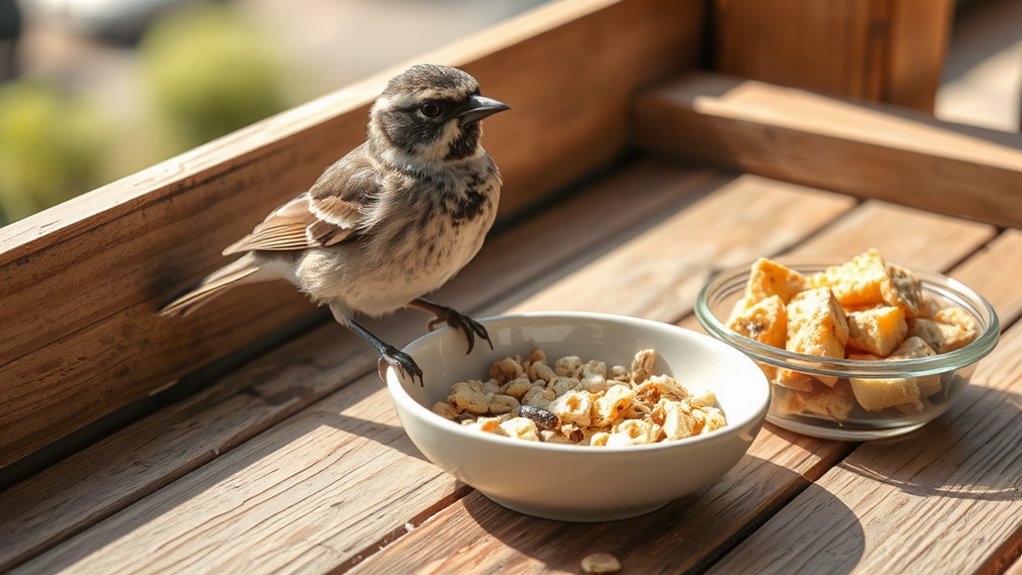
Getting cereals ready for birds is easy and fun, especially if you keep safety in mind. Break up any whole grains into crumble-sized pieces so tiny beaks can grab them easily. Use plain oats or unsugared cereals and avoid milk unless you soak to a soft, safe texture. Soaking improves softness, but keep soaking time short, just a few minutes, then drain well before offering. Sprinkle crumbs on a clean table or tray, mix in a few seeds, and watch which birds visit. Keep portions small and refresh regularly to avoid spoilage and keep birds curious outside.
How Much Cereal Should You Feed Birds?
After learning how to prepare cereals safely, pace feeding by keeping portions small and regular. Start with a small spoonful at a time and watch how birds respond without overeating. Portion control helps prevent waste and avoids crowding your feeder. Set frequency limits, offering cereal only a few times per week during migration or cold spells. Pair cereal with seeds and water, and alternate days so birds stay curious but balanced. If you see overeating signs, reduce portions and pause feeding for a day. Patience makes this hobby simple, friendly, and rewarding for both of you.
Safe Cereal Alternatives and Supplements for Birds
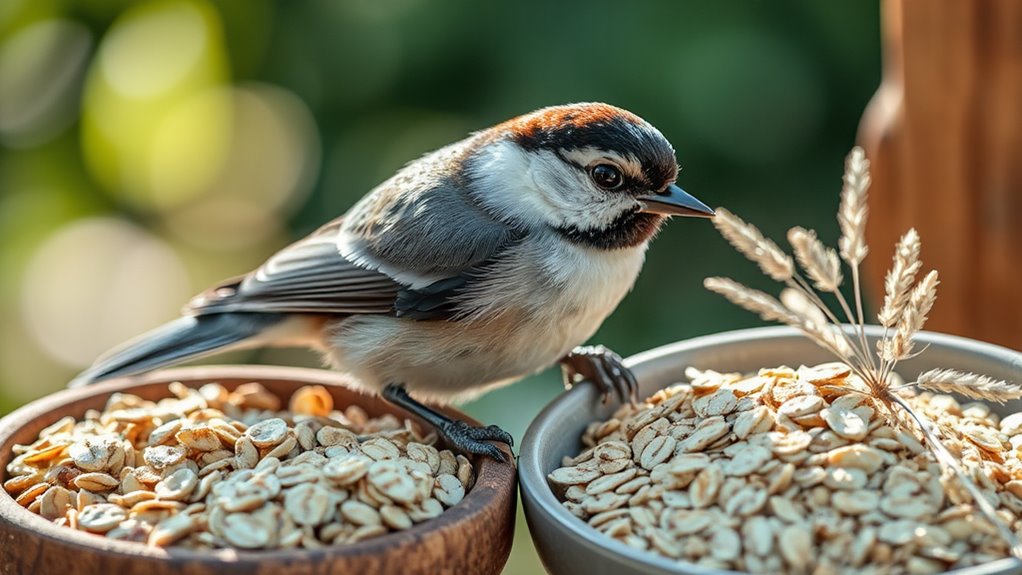
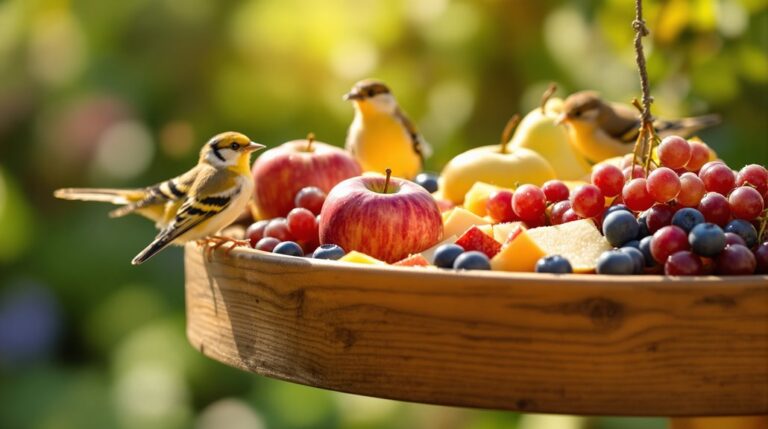
Good news: there are tasty, safe cereal alternatives and supplements that birds can enjoy. Offer nut mixes and seed blends as snacks, not as full meals. Break up small bits and scatter them on a clean table or tray to attract different species. Pair cereals with plain oats or shredded whole grains for texture, then add fresh fruit slices for color. Keep portions moderate, and mix seeds with nuts to balance protein and fat. Always monitor pickup and adjust portions so your feathered friends stay curious, energetic, and healthy during feeding sessions. They love simple, safe snacks too.
Frequently Asked Questions
Can Baby Birds Digest Cereals Like Oats and Cornflakes?
Baby birds can digest small amounts of oats and cornflakes, but you should monitor portions to protect the crop and gizzard. Break the cereals into fine crumbs, offer sparingly, and avoid salt, sugar, or additives. Prefer natural foods and clean, fresh water when possible.
Do Cereals Cause Feather or Beak Issues Long-Term?
Yes, cereals can contribute to feather plucking and beak malocclusion if a bird’s diet is imbalanced. Monitor sugar and salt intake, prefer whole oats as part of a balanced diet, avoid highly processed cereals, and ensure adequate protein and dietary variety. Seek veterinary guidance to prevent issues.
Can Cereal Feeding Replace Natural Insect Protein Year-Round?
No, cereal cannot replace natural insect protein year-round. Birds risk nutrient deficiencies and behavioral changes because cereals lack essential amino acids and the foraging variety insects provide. Supplement with insects or appropriate alternatives, and monitor health and energy levels.
Are Cereals Safe for Nectar-Feeding Birds Like Hummingbirds?
Cereals aren’t safe for nectar-feeding birds like hummingbirds. Stick with sugar water or nectar substitutes, and offer appropriate nectar sources. Cereal crumbs can choke or harm them, and they need nectar, not solid foods.
Should Cereal Feeding Be Avoided During Breeding Season?
Yes, you should avoid cereal feeding during the breeding season to prevent parental neglect and calcium deficiency in chicks. Feeding can disrupt nesting, provoke conflicts among birds, and oversupply grains. Skip feeding and let the parents forage and rear their young.
Conclusion
Trying cereals with birds can be fun and rewarding, as long as you keep safety in mind. Offer plain oats or whole grains in tiny crumbs mixed with seeds, a few times weekly. Skip sugary, salty, or chocolate cereals, and always provide fresh water nearby for washing. Watch for pests, offer small servings, and alternate with seeds to keep birds curious and healthy. With practice, cereal treats become a simple, enjoyable part of backyard birding.