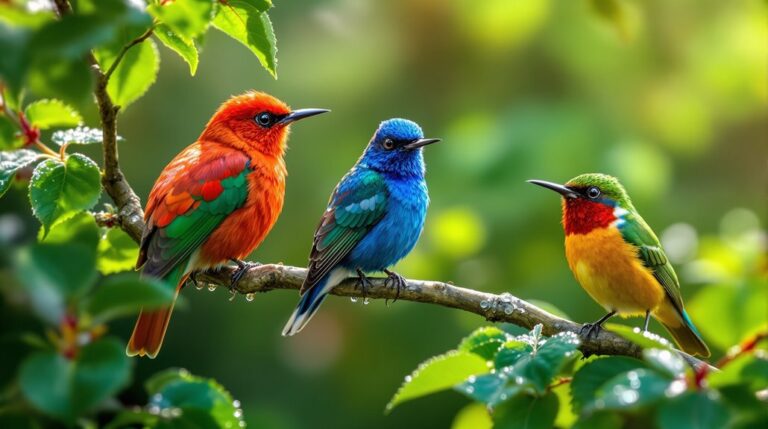
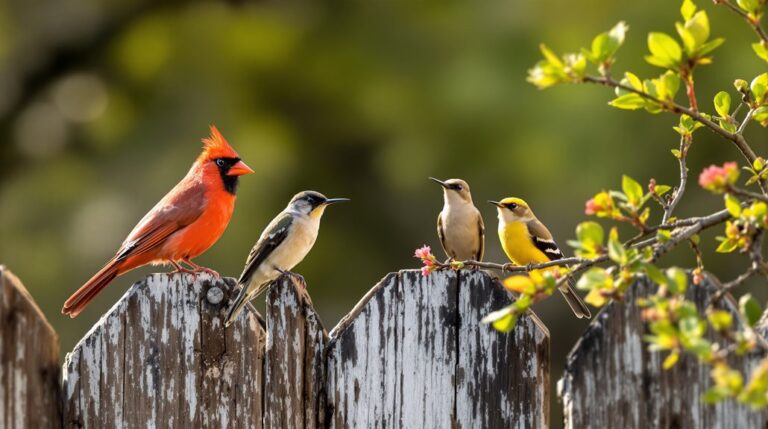
Exploring Types of Common Birds in backyards is easy and fun, you can start with tips and photos.
You’ll spot a Cardinal by its crest and red color, or a Robin with an orange breast and upright stance.
A Chickadee shows a small body, black cap, and white cheeks, while a Mourning Dove is slim with soft cooing.
Learn quick field marks, songs, and feeding habits, then notice how quiet moments turn into small adventures, just ahead.
Common Backyard Birds: What You’ll See Most

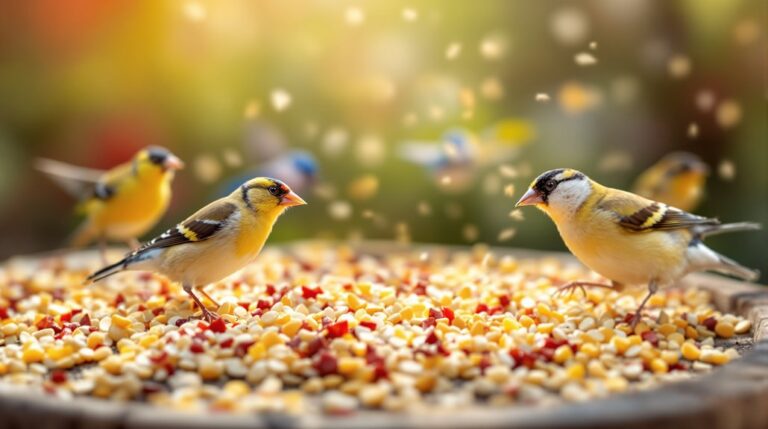
You’ll probably notice several favorite backyard visitors that make spring and summer feel brighter. You’re learning which birds show up most, how they act, and how your yard fits their needs. Common backyard birds like chickadees, cardinals, robins, and doves visit daily, and you’ll see busy feeders and curious trails. Pay attention to bird behavior, then adjust feeder choices to match what they like. Put out seeds for cardinals and mixed blends for chickadees, keep water available, and clean the feeder regularly. With small steps, you’ll enjoy a lively, rewarding outdoor routine. Friends will notice, and you’ll smile daily. A high-energy diet supported by sunflower seeds & peanuts helps sustain these active birds throughout the day. For sharper images when photographing these frequent fliers, consider using a sturdy tripod to stabilize your camera gear.
How to ID Backyard Birds at a Glance
Want a quick read on who’s visiting your yard? Start with the basics. Look for plumage and behavior to identify birds fast. Notice size, shape, and posture, then compare common traits like a crest, a white cheek, or a bright breast. Listen for a signature song or call, which often seals the match. Watch feeding habits, perch style, and whether they skim the ground or cling to branches. With practice, you’ll recognize families, not just species, and feel confident describing birds to friends. This simple approach keeps birding fun and accessible for everyone, anywhere outdoors together. For sharper identification, consider using a camera with fast continuous shooting to capture clear images of fleeting moments. A camera with APS-C sensor provides superior image quality and enhanced zoom reach, making it easier to identify birds from a distance.
Spotting the Cardinal: Color, Crest, and Song

Building on backyard ID basics, cardinals catch your eye with their bright red color and bold crest. You’ll notice the male plumage first, brilliant red from head to tail, clean and bold. During the season you’ll hear a clear cheer, a whistle-like, cheerful, simple sound. If you see a duller bird beside him, note the female differences, subtler tones. They perch on branches near feeders, sing from treetops, and brighten your yard. Practice quick checks: look for the crest shape, round head, and bold beak. With patience, you’ll remember this simple pattern and enjoy spotting cardinals daily.
American Robin ID: Orange Breast, Upright Stance, Song
American Robins stand out in yards with their orange breast and upright posture. You notice their bold stance as they hop along lawns. When you learn about robin diet, you see they eat grubs, berries, and seeds. Their nesting habits are easy to spot, with neat cup-shaped nests woven in shrubs. In spring you might hear a soft chatter as mates gather nest materials. Keep bird baths so you can enjoy their looks without disturbing them. Robin diet and nesting habits are simple clues that deepen your yard fun. With practice, you spot robins quickly and feel confident identifying them.
Chickadee at a Glance: Size, Cap, and Silhouette

Chickadees are tiny, cheerful birds you can spot quickly thanks to their bold cap. You notice a compact silhouette with a short tail and a round body, plus a sharp, wedge-shaped bill. At a glance, the size is about five inches, smaller than robins, so you move in close and listen. Plumage stays boldly black on the cap and bib, white cheeks, and gray sides that blend with branches. Their behavior is lively, hopping, pausing to peek, then flitting again. You can attract them with suet, mixed seeds, and a feeder near shrubs for easy viewing outside.
Red-winged Blackbird: Field Marks and Habitat
Red-winged Blackbirds are easy to spot where cattails grow, with males flashing bold red shoulder patches. Females blend into reeds, while males stand out among marsh birds with bright bursts of color. Field marks include the bold red shoulder patches and their sleek black bodies during the breeding season. Habitat includes wetland edges, marshy ponds, and cattail thickets where they forage for insects and seeds. Listen for their conk la ree song, and scan reeds for quick darting tails and bright flashes. If you’re new, bring binoculars, watch at dawn, and keep notes about perch sites and nearby water trails.
Northern Flicker ID: Bill, Wing Pattern, and Flight

Seeing a Northern Flicker up close is easier than you might think once you know the bill and wing cues. Notice the bill, light and sturdy, with its shaft color visible in bright sunlight. On the wing, the bold pattern helps you identify it quickly, with bars and spots that stand out as the bird hops on logs. The flicker’s flight is smooth and undulating in short hops, not a straight dive. Watch for the yellow-shafted or red-shafted forms in different populations. With practice, you’ll recognize it anywhere, and that makes birding fun for you and your friends.
Mourning Dove ID: Shape, Coos, and Tail
Compared with other birds, the Mourning Dove has a smoother silhouette. Its slender body, long tail, and soft gray-brown color make it easy to spot on sidewalks and at feeders. You’ll hear gentle vocalizations, a calm coo that suggests safety and calm, delivered at a steady pace. Watch for the tail length as it fans slightly when perched, a quiet signal you can read. This bird favors urban parks, yards, and feeders, so you can practice ID with your daily walks. Start with simple notes, compare its shape with other doves, listen for the soft vocalizations, and enjoy.
Frequently Asked Questions
Do These Birds Migrate Seasonally or Stay Year-Round?
Some birds migrate seasonally, while others stay year-round. Migration patterns vary: cardinals, chickadees, and doves often linger in winter ranges; robins and flickers tend to move more; red-wings and other species adapt to winter ranges across regions.
Which Bird Has the Sharpest Conical Seed-Cracking Bill?
The Northern Cardinal has a sharp conical seed-cracking bill. You’ll notice its bill strength underscores feeding power, an example of beak evolution in action as cardinals crack seeds while others struggle with tougher shells each season.
How Do Juvenile Plumages Differ From Adults in These Species?
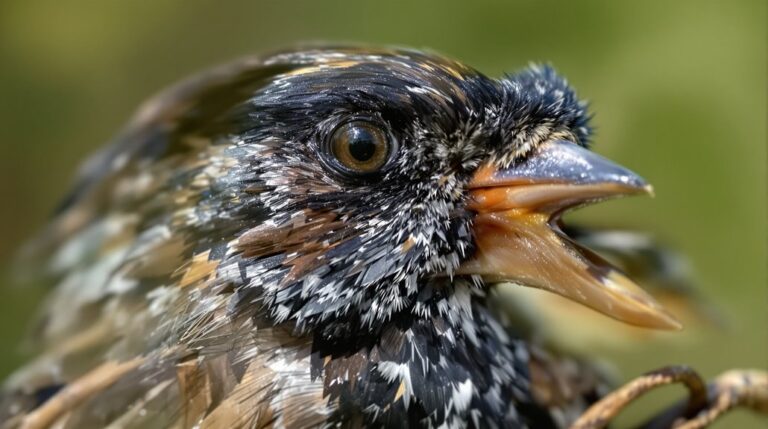
Juveniles differ from adults in these species by showing spotting patterns, duller colors, fluffier feather development, softer feather edges, and brownish tones with faint markings. A molt gradually reveals the brighter adult plumage in cardinals, robins, chickadees, blackbirds, flickers, and mourning doves.
What Vocalizations Indicate Nesting or Alarm Beyond Basic Songs?
During nest guarding, alarm vocalizations switch to chip calls and persistent scolding chatter, signaling intruders or adults protecting young. Expect hurried, sharper notes, tail flicks, and rapid chattering as warning cues beyond their ordinary song repertoire in the area today.
Are There Hybrids or Rare Color Morphs in These Species?
Yes, hybrids and rare color morphs occur. You may see hybrid finches in mixed flocks or rare canaries arising from mutations. Some populations exhibit allelic shifts that produce unexpected hues alongside the characteristic Cardinal, Robin, and Chickadee plumage.
Conclusion
Bird watching is a fun, simple hobby you can start right in your yard. Grab a notebook, a pair of binoculars, and a curious mindset. Notice colors like cardinals’ bright red plumage, robins’ orange chests, and doves’ soft gray. Listen for songs, watch for how birds perch, then try a quick feeder setup or a sunny tree to attract them. With a little patience, you’ll spot new species, learn their calls, and enjoy nature every day.