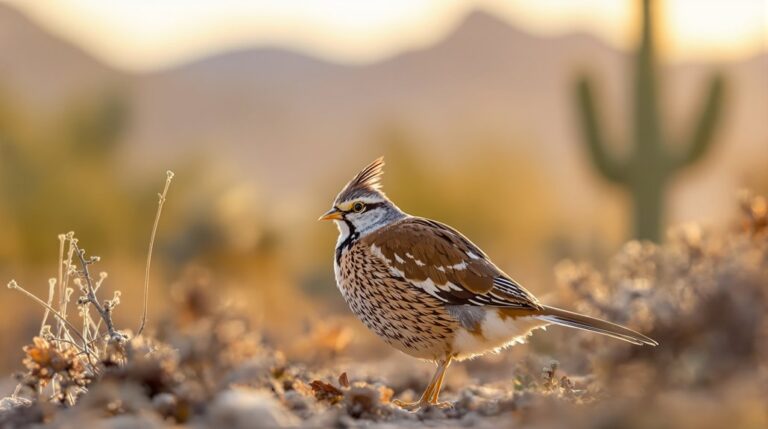
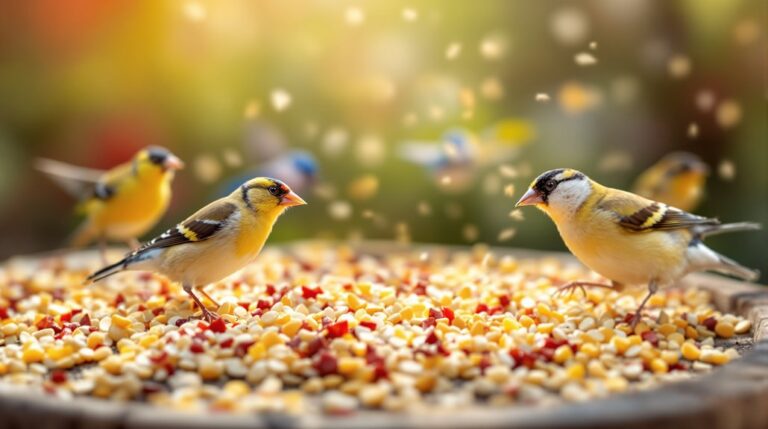
Colorful Birds of North America can be spotted in backyards, from vivid Indigo Buntings to bright Orioles.
These birds flaunt solid blue, orange and black, or yellow plumage that makes you grin.
To find them, look in hedgerows, lakes, wetlands, and feeders, especially in spring and early summer.
Listen for their songs, keep quiet, and watch for families near shrubs and sunflowers.
It’s a rich, relaxing hobby that invites you to explore more, so stay curious.
Meet North America’s Five Showpiece Colorful Birds
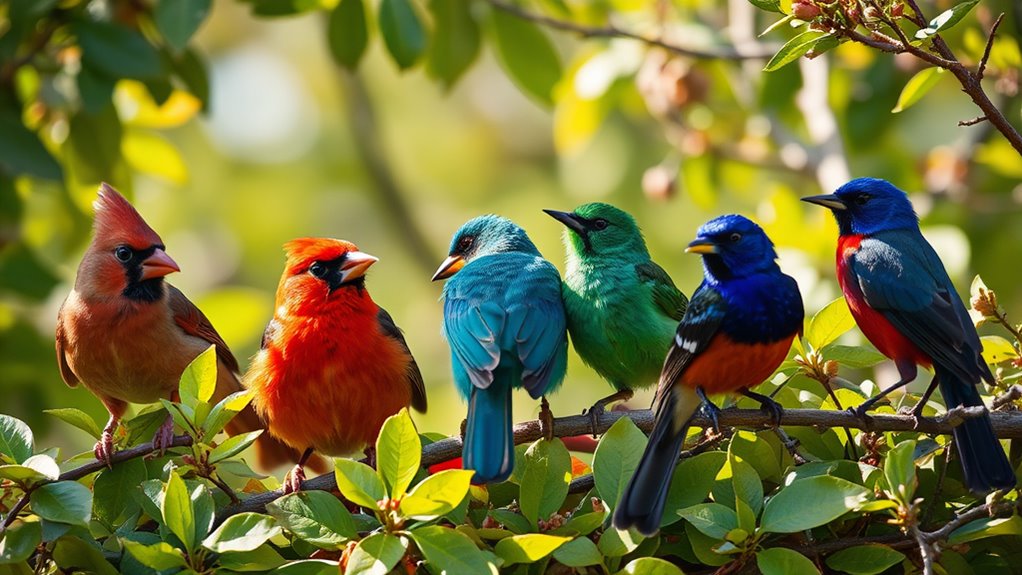
Meet North America’s five showpiece colorful birds, the brightest stars you’ll spot, and they’re easier to attract than you might think. Compare plumage differences among Painted Buntings, Orioles, and Goldfinches, and keep a small field notebook to note what you observe. Listen for their vocalizations; their songs and chirps are useful clues to tell species apart. Set up simple feeders, provide water, and create sunny spots to invite them to your yard. Keep it straightforward: plant native shrubs, offer sunflower seeds, and provide a sheltered perch. With a bit of patience, you’ll enjoy vivid colors and lively backyard birding for years to come. A nutritious blend like sunflower hearts & chips supports high energy needs and attracts a variety of colorful songbirds. For sharper, more detailed images when photographing these vibrant species, consider using a lens with fast optical image stabilization.
Indigo Bunting, Baltimore Oriole, Rose-breasted Grosbeak: Key Field Marks
Indigo Buntings: males glow bright blue with solid blue plumage. Baltimore Orioles show orange bodies with black wings and tails. Rose-breasted Grosbeaks stand out with bold, chunky bills and strong contrast against white underparts. Song helps, too, with each species offering a distinct, cheerful whistle or twang. Observe behavior, Oriole perching low, buntings zigzagging through hedges, and compare color patterns side by side with friends. For clearer, sharper images in flight, use a fast shutter speed to freeze motion and capture fine feather details. Cameras with high-speed continuous shooting, such as the Canon EOS R7 capable of 15 fps, make it easier to capture birds in dynamic action.
Where and When to See These Birds Across the Continent
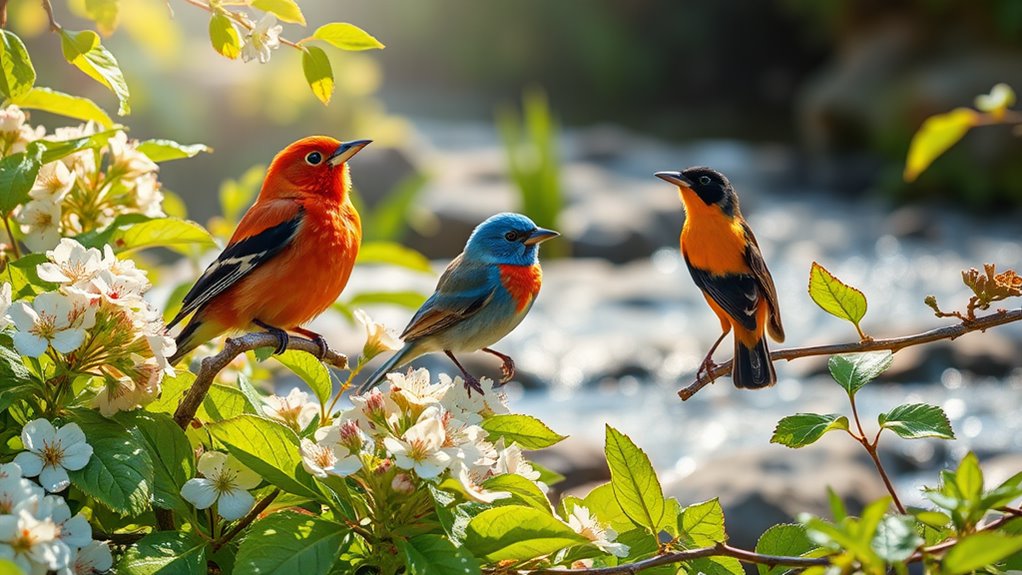
Across the continent, you can find these colorful birds from coast to forest, depending on season. Where and when to look changes with migration and seasonal shifts, so you can plan enjoyable daytime outings. In spring, watch fields for Indigo Buntings and Orioles near hedgerows; in summer, lakes attract Painted Buntings and Wood Ducks. Fall brings flocks along rivers and in city parks, while winter favors sheltered wetlands where Goldfinches brighten feeders. Plan short trips, listen for songs, and peek with binoculars from clear spots, then share sightings with friends. You’ll quickly see why birding feels lively and rewarding.
Practical Tips for Spotting These Birds in the Wild
If you’re new to birding, start in a simple, safe spot and go with a friend. Take a moment to observe the area before you move, listen for chirps, and keep your expectations modest for a quick sighting. With Binocular basics, you’ll frame birds in a comfortable view so you don’t scare them away. Move slowly along trails, keep your eyes on feeders, and scan treetops for color flashes. Note habitat clues like water, open fields, or sunlit bushes, and adjust your stance for better light. Be patient, stay curious, and share tips with a friend. Remember, practice makes spotting these birds easier and more fun. You’ve got this, keep exploring together today.
Quick Reference: Quick-ID Guide to the Five Species
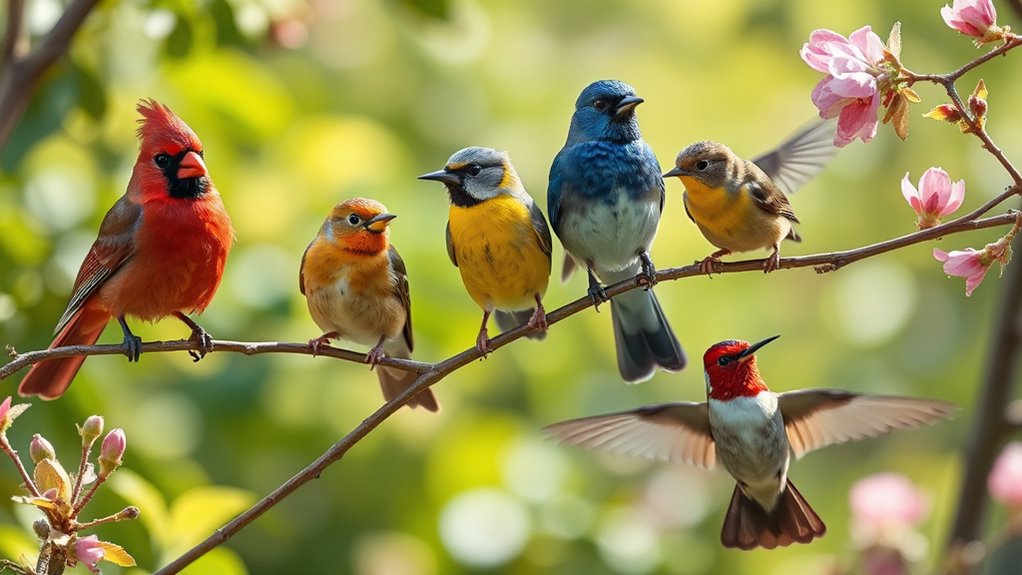
Want a fast, fun way to identify five easy North American birds in your area? You’ll notice plumage details, like the Indigo Bunting’s bright blue and the Painted Bunting’s rainbow mix, and you’ll rely on song recognition to tell them apart. Watch the Wood Duck’s bold red eyes and multicolor body, the American Goldfinch’s sunny yellow plumage in spring, and the Rose-breasted Grosbeak’s sturdy beak as clear clues. At feeders or in the yard, use quick looks and sounds, stay curious, and enjoy learning one cheerful bird after another. Soon you’ll spot them faster, share tips, and trade notes.
Frequently Asked Questions
What Are Their Conservation Statuses?
Most of these birds are listed as Least Concern, but the Painted Bunting is Threatened in parts of its range and is listed as Endangered by some authorities; others, such as the Indigo Bunting, remain stable.
Do These Species Have Close Look-Alikes or Hybrids?
Yes, some species have close look-alikes or hybrids. When you compare field marks, you’ll notice subtle differences. Hybridization occurs where ranges meet and can produce plumage that resembles Painted Bunting, Indigo Bunting, or Orioles, so be cautious of misleading color cues.
When Is Peak Plumage Coloration for Each Species?
Peak plumage timing by species:
- Painted Bunting: peak plumage after molting cycles
- Wood Duck: coloration heightens during the breeding season
- American Goldfinch: brightens during the breeding season
- Indigo Bunting: glows during the breeding season
- Rose-breasted Grosbeak: peaks after molting
- Baltimore Oriole: peaks during the breeding season
What Do They Primarily Eat Across Seasons?
Across the seasons, they primarily eat seeds and insects, with occasional fruit nectar. Painted Buntings and grosbeaks crave seeds; goldfinches shift toward seeds, orioles relish fruit; wood ducks consume aquatic vegetation, insects, and seeds year-round.
How Do Juvenile Plumages Differ From Adults?
Juvenile plumages are duller and mostly streaked, as seen until they molt. Adults display brighter colors soon after molting is complete, with sharper patterns and greater contrast that become more pronounced as maturity progresses.
Conclusion
Grab your binoculars, head outside, and start spotting colorful birds with confidence this season.
Try sunflower seeds, native shrubs, and steady listening for clear chips and whistles at dawn.
Move slowly, scan the horizons, and note plumage, songs, and where you find them most often.
If you miss a bird, stay patient, return another day, and explore different habitats nearby too.
With practice, spotting these beauties becomes fun, easy to learn, and totally worth your time.