Will Wild Birds Eat Bananas? You can enjoy a simple, safe treat by offering small, peeled banana bites to backyard birds, in bowls or on lids.
You’ll see robins, thrushes, and orioles peek in, and you can mix in seeds to balance their diet.
Keep fruit fresh, remove leftovers, and watch what birds prefer.
Bananas are easy to handle, but you’ll want to learn how to prepare them just right and when to stop, if you want more surprises ahead.
Are Bananas Safe for Backyard Birds? A Quick Verdict
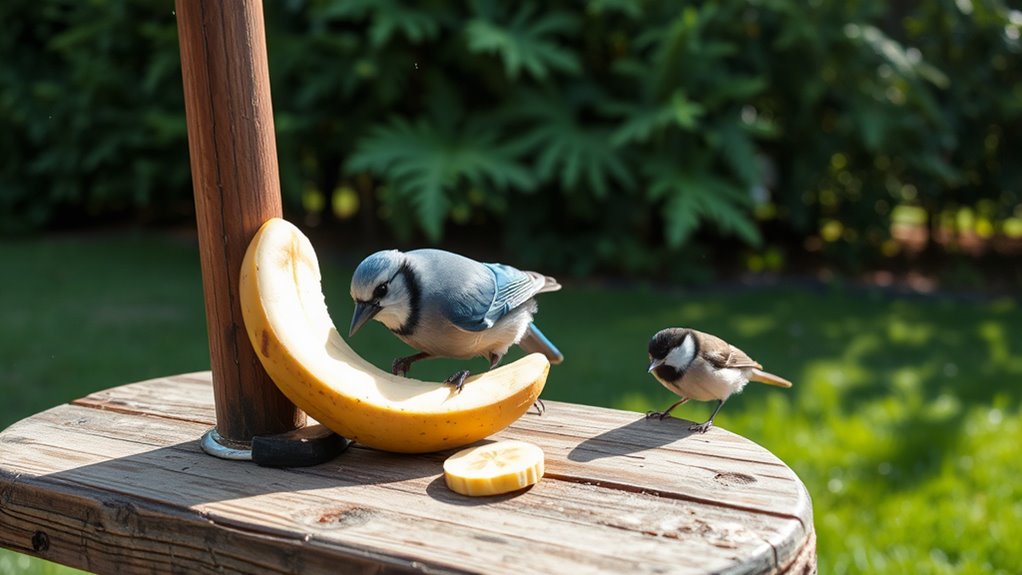
Bananas can be a safe treat for backyard birds when offered in moderation. Offer small bites, especially to beginners, and observe how birds respond. Keep portions gentle and avoid overripe fruit with bruises. Bananas provide quick energy, but be mindful of sugar levels to prevent spikes in activity. For digestive health, remove peels and offer in small pieces so small birds can chew easily. Rotate with other fruits and always provide fresh water nearby for easy hydration. If a bird ignores bananas, try softer textures or mix with seeds, staying mindful of the overall diet. Make feeding enjoyable. A balanced diet supports overall health, especially when incorporating treats like fruit alongside nutritious seed options that meet birds’ fat, protein, and carbohydrate needs.
Why Bananas Help (and What They Don’t) for Birds
Because their natural sugars give birds a quick energy boost, bananas are a handy snack in the yard. Think of them as an easy energy source for active feeders, especially after a long day of singing. You can offer ripe slices in a shallow dish, and smaller birds appreciate bite-sized pieces. Bananas support feather health with gentle nutrients, and they mix well with apples or berries for variety. Keep portions moderate, and watch for spoilage in warm weather. Always remove uneaten pieces, because freshness matters and you want pleasant, safe treats for your feathered friends for everyone involved. A stable viewing experience helps birders spot subtle feeding behaviors more clearly with 12x magnification. For clearer observation without disturbing the birds, consider using a tripod-mounted setup to maintain steady, hands-free viewing from a distance.
Which Backyard Birds Are Drawn to Bananas?
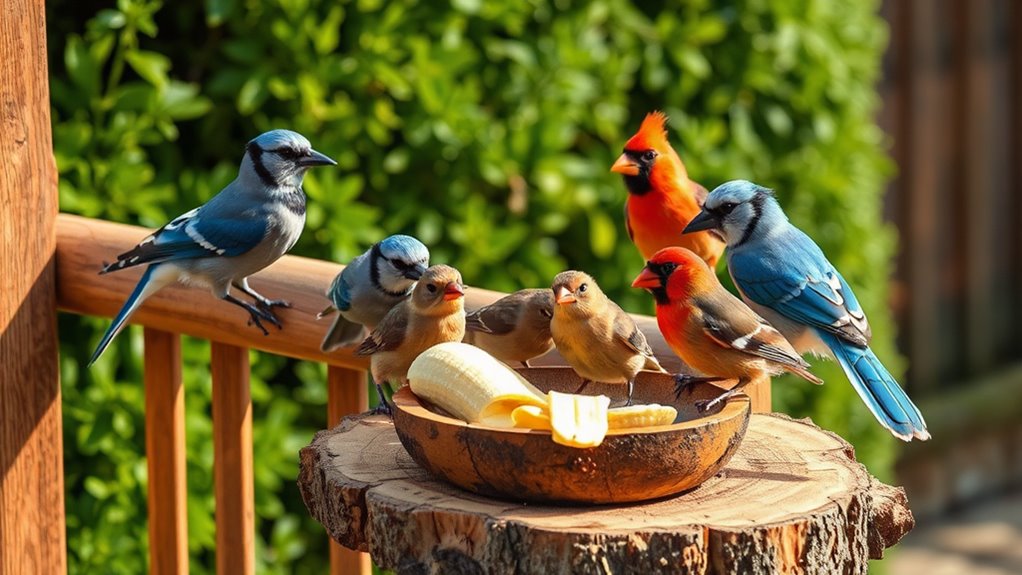
Some backyard birds, like robins and thrushes, show a real fondness for bananas. You’ll notice these pals love sweet slices on a sunny morning. Orioles become curious when the fruit smells ripe, and you might call them Orioles favorites. Starlings also include bananas in their diets, especially in spring when they hunt for quick energy. Put a few small pieces on a safe feeder tray, and watch as they arrive. Keep portions modest and remove leftovers, so your other birds stay interested without waste. With practice, you discover friendly visits and easy treats that fit any garden. Have fun trying. For those capturing these moments, a fast autofocus system ensures sharp images of birds in motion.
How to Prepare Bananas for Small Birds at Home
Getting bananas ready for tiny birds is easy and fun, and it fits busy days. Start with ripe but not mushy fruit, then wash your hands and prep a clean surface. For mashing, use a fork or spoon to mash small pieces until soft so beaks can pick it up easily. Most small birds do better with peeled fruit, so skip thick peels that slow feeding. Serve in bowls or on a lid, and keep pieces fresh. Keep portions small and remove leftovers within a few hours to prevent spoilage. Routine boosts appetite and makes birding enjoyable.
Safe Serving Guidelines and Portion Tips for Banana Treats

- Start with small, moderate portions and treat bananas as a tasty supplement, not a main meal. Offer tiny pieces after meals and observe how birds respond.
- Keep servings aligned with daily amounts and mix bananas with other fruit and seeds to balance fruit ratios for a healthy menu.
- Choose small chunks for small birds and slices for bigger species, and remove leftovers after a few hours. This helps keep treats fun without sugar spikes.
- Rotate treats with berries and apples to keep diets interesting, and always provide fresh water.
- If a bird ignores bananas, try again later. Remember that moderation supports enjoyable bird-watching.
What to Pair With Bananas for a Balanced Bird Diet
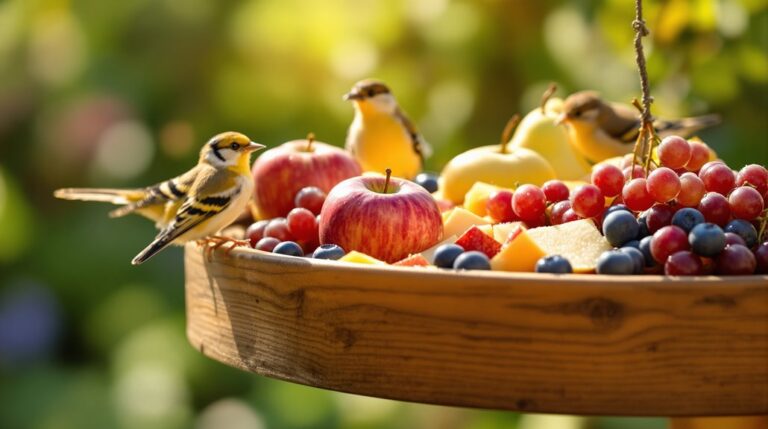
Pair bananas with a variety of fruits and some protein to keep birds healthy and curious. Choose fruit blends like apples and berries for color and variety, and mix in small amounts of protein sources such as mealworms or chopped nuts. Offer diced bananas with sliced pears, grapes, or melons to create a simple, tasty plate. Add a sprinkle of seeds to attract different species, but keep portions moderate so fruit remains a treat. Serve fresh, remove leftovers, and observe which combos your birds enjoy for long-term joy. With practice, feeding becomes a cheerful daily habit.
Common Risks and How to Prevent Spoilage

Even with careful prep, bananas spoil quickly outdoors, so check daily. Keep things simple and safe by removing bruised pieces, storing leftovers in a covered container, and offering small portions at a time. Spoiled fruit can attract pests and encourage bacterial growth, so trash it promptly and clean the area. Rotate offerings to avoid mold, and wash your hands after handling fruit. Monitor the weather, because heat speeds spoilage, and bring out fresh pieces in the mornings. If you notice mushy spots, cut them away promptly to prevent birds from sampling, keeping your yard healthy and enjoyable.
Quick Troubleshooting: When Bananas Don’t Work for Your Birds
Sometimes bananas don’t click with every bird, so stay flexible and test a few quick fixes. First, watch texture preference by offering mashed fruit or tiny soft pieces to see what your bird likes. Next, address placement issues by trying different bowl heights and shady spots to find where the flock gathers. Keep portions small and remove leftovers to prevent spoilage. If there’s still no interest, mix bananas with apples or berries to boost appeal. Stay positive, and enjoy the hobby as you learn what each bird loves in your yard. Patience makes your feeders a favorite spot today.
Frequently Asked Questions
Do Wild Birds Prefer Ripe Over Underripe Bananas?
Yes, wild birds tend to prefer ripe bananas because they are sweeter and softer. Observe texture and sweetness preferences, and offer ripe pieces first; underripe fruit may be ignored or eaten later.
Can Bananas Cause Feather Mites or Parasites in Birds?
Bananas do not inherently cause mite transmission or feather damage in healthy birds. However, spoiled fruit can harbor pathogens. Keep servings fresh, clean feeders, and remove leftovers to help prevent mite transmission and feather damage.
Are Bananas Suitable for Fledglings and Nestlings?
Yes, bananas can be offered to fledglings in moderation. Use mashed, soft textures to aid digestion and support development. Avoid overfeeding; provide small portions, and pair with protein-rich foods to promote balanced growth and hydration.
Do Bananas Interfere With Any Bird Medications?
No, bananas don’t typically cause drug interactions with common bird medications, and they shouldn’t affect antibiotic effectiveness when fed in moderation. If your bird misses doses or is on medications, consult a veterinarian.
How Should I Dispose of Leftover Banana Scraps?
If possible, compost banana scraps because composting returns nutrients to the soil. If composting isn’t feasible, dispose of the leftovers in the trash, keeping them away from wildlife and monitoring for spoilage to avoid attracting pests.
Conclusion
Banana treats can be a simple, enjoyable way to connect with local birds, as long as portions are small and the fruit is fresh. Cut bananas into small pieces and consider mixing in seeds to attract a wider range of species. Check bowls often and remove leftovers before they spoil. Observe which birds show interest, from robins to orioles, and adjust based on what they seem to prefer. With clear guidelines and regular cleanup, feeding bananas stays safe, easy, and a real pleasure for you and your feathered visitors, everyday neighbors.